
What Is an Open-Ended AI Chat Experience?
An open-ended conversation does not force users into a fixed structure or narrow set of topics. It allows them to start with a simple question, explore related ideas, change direction, provide additional context, and continue the discussion without restarting from the beginning.
An open-ended AI chat experience works similarly. The AI responds to the user’s instructions while considering the context of the ongoing exchange. This creates a more fluid interaction than traditional search engines, scripted chatbots, or basic automated support tools.
Users can explore creative concepts, discuss complex subjects, improve written content, brainstorm business ideas, develop fictional scenarios, or examine different sides of a topic. The conversation can become as focused or as broad as the user needs.
Uncensored AI Chat supports this conversational style by giving users space to express detailed requests and build on previous responses. The result is a more engaging experience that encourages curiosity rather than limiting it.

Why People Prefer Flexible AI Conversations
Traditional online search often requires users to open multiple pages, compare sources, rewrite search queries, and organise information themselves. Standard chatbots can be even more restrictive because they usually operate through predefined questions and automated responses.
A flexible AI conversation offers a different experience. Users can explain what they need in everyday language and refine the response through follow-up prompts. They do not need to know the perfect technical term before beginning.
This flexibility is especially useful when the user is still defining the problem. Someone may have a general business idea but need help identifying the target audience. A writer may have a topic but no clear structure. A learner may understand part of a subject but need the remaining information explained differently.
In each situation, conversational AI can adapt as the user provides more details. Uncensored AI Chat makes that process feel less like operating a rigid tool and more like working through ideas with an interactive digital assistant.

Natural Conversations With Contextual Understanding
Following the Direction of the Discussion
One of the most important qualities of advanced conversational AI is its ability to understand context. A useful AI chat platform should recognise what has already been discussed and respond accordingly.
For example, a user might begin by asking for ideas for an online business. After receiving several suggestions, the user may select one, request a marketing plan, adjust the target market, and ask for brand messaging. Each request depends on information established earlier in the conversation.
Contextual AI communication reduces the need to repeat instructions. It also helps produce responses that feel connected rather than random or disconnected.
Uncensored AI Chat allows users to develop ideas progressively. The conversation can evolve naturally as goals, preferences, and requirements become clearer.
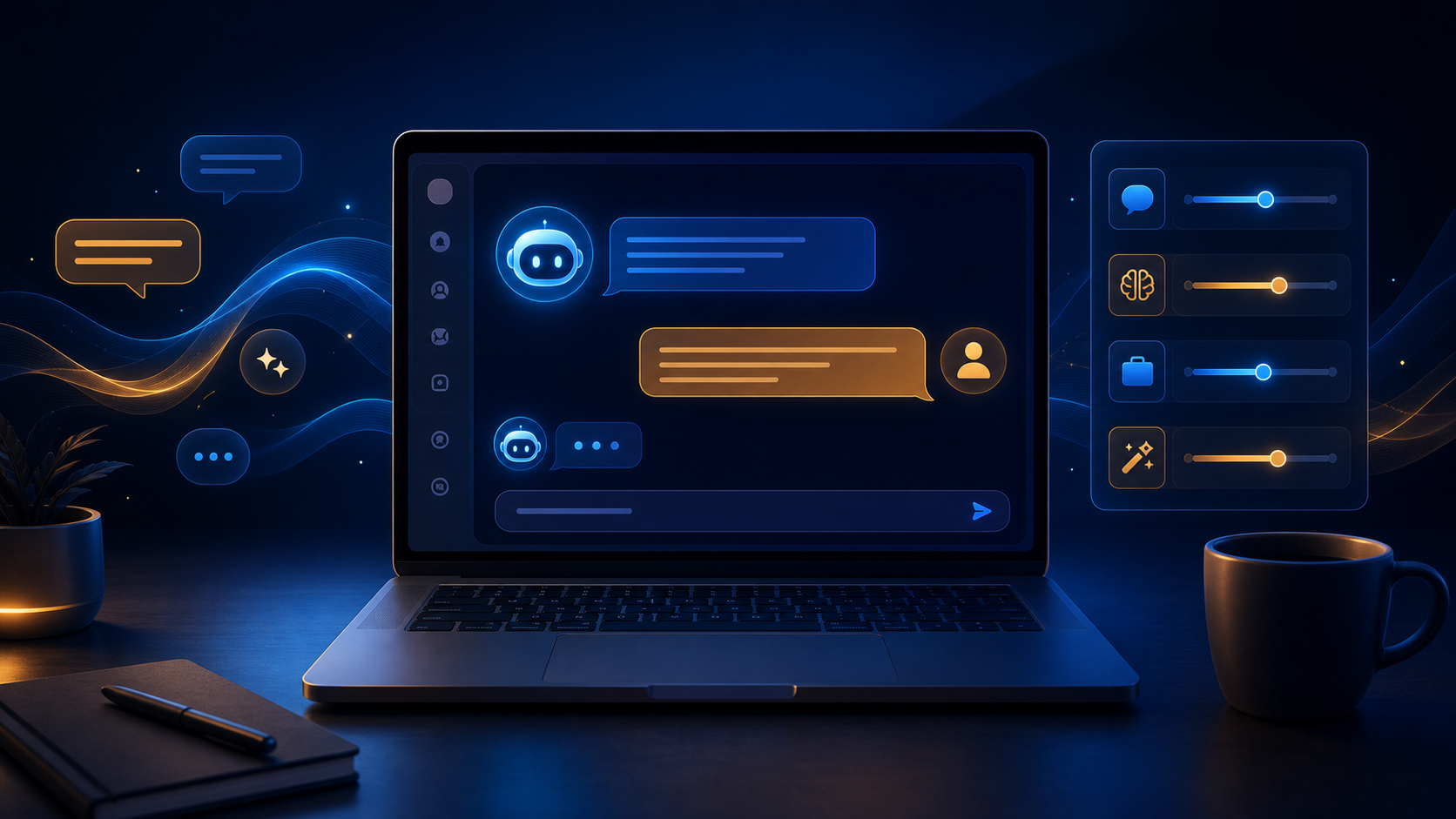
Adapting to Different Communication Styles
Every user communicates differently. Some people prefer brief answers, while others want detailed explanations. Some use formal language, and others write short, informal prompts.
A strong open AI conversation platform should be able to respond appropriately to different styles. It should also adapt when users ask for a simpler explanation, a more professional tone, a creative approach, or additional detail.
This adaptability makes conversational artificial intelligence useful for a broad range of users, including entrepreneurs, students, marketers, researchers, content creators, and curious individuals.
Creative Freedom and Idea Exploration
Creativity rarely follows a perfectly organised path. A strong idea often develops through experimentation, unexpected connections, and repeated refinement. An open-ended AI chat experience can support this process by helping users explore possibilities without demanding a finished concept at the beginning.
Writers can develop characters, settings, article concepts, dialogue, and story structures. Marketers can brainstorm campaign themes, content angles, audience interests, and brand positioning. Business owners can explore product ideas, service improvements, naming options, and customer communication strategies.
The greatest value often comes from the conversation itself. An initial response may reveal a new direction that the user had not considered. The user can then ask for variations, challenge assumptions, combine ideas, or develop the strongest concept in greater depth.
Uncensored AI Chat provides an environment where this kind of exploration can continue naturally. Users remain in control of the direction while the AI helps expand, organise, and refine their thinking.
Practical Uses for Everyday Tasks
Open-ended AI is not limited to creative experimentation. It can also assist with practical, everyday work.
Professionals may use conversational AI to improve emails, simplify technical information, prepare meeting notes, organise project ideas, or draft internal documents. Website owners can explore content topics, develop page structures, improve product descriptions, and examine customer questions.
Students and independent learners can request explanations of difficult concepts, compare theories, generate study material, or ask for examples. The conversation can continue until the subject becomes easier to understand.
Users can also use an unrestricted conversational format to think through personal projects, travel ideas, learning goals, productivity challenges, or general decisions. The AI does not replace professional expertise or personal judgement, but it can help users organise information and view a situation from different angles.
Because Uncensored AI Chat supports continuing dialogue, users can move beyond the first answer and request clarification, alternative approaches, or more specific guidance.
Greater Control Over AI Responses
A useful AI conversation should not feel like a one-way interaction. Users should be able to guide the output by specifying the tone, format, length, audience, purpose, and level of detail they need.
A user can ask for a technical explanation and then request a simpler version. A business owner can provide a rough description and ask for a more persuasive message. A content creator can request several different angles before choosing the strongest one.
This level of control makes the experience more personalised. The quality of the result often improves as users provide clearer context and more specific instructions.
Uncensored AI Chat encourages this collaborative process. Users can review a response, identify what needs to change, and continue refining it within the same conversation. This creates a more efficient workflow than repeatedly starting again with new prompts.
Balancing Conversational Freedom With Responsible Use
Freedom in AI communication is most valuable when it is paired with thoughtful use. Artificial intelligence can generate ideas, explanations, and written material quickly, but users should still review important information before relying on it.
AI responses may occasionally be incomplete, outdated, or inaccurate. Information involving health, law, finance, safety, or other high-impact decisions should be checked against reliable sources and qualified professional advice.
Users should also avoid sharing confidential business data, private account information, financial credentials, or personal details that are not necessary for the conversation.
Responsible use does not reduce the benefits of open AI communication. Instead, it helps users gain practical value while maintaining appropriate judgement and awareness.
Uncensored AI Chat is best treated as a conversational tool for exploration, productivity, learning, and creative development. The user provides the purpose and direction, while the technology assists with generating and organising ideas.
How Better Prompts Improve the Conversation
Although users can begin with a simple question, detailed prompts often produce more useful responses. Providing background information helps the AI understand the goal and generate content that matches the situation.
For example, requesting help with a marketing campaign becomes more effective when the user explains the product, target audience, location, preferred tone, and desired outcome. A writing request improves when the intended reader and publication format are clearly defined.
Users can also improve results through follow-up instructions. They may ask the AI to expand a section, remove unnecessary language, provide a different perspective, or make the response easier to understand.
An open conversation removes the pressure to create the perfect prompt immediately. Users can begin with what they know and improve the result through interaction. This conversational prompting process is one of the key strengths of Uncensored AI Chat.
The Future of Interactive AI Communication
As conversational technology develops, users are likely to expect more adaptive, personalised, and context-aware interactions. AI chat platforms will increasingly become tools for collaboration rather than simple question-and-answer systems.
People will use them to develop ideas, learn new skills, organise complex information, improve communication, and support everyday decision-making. The most valuable platforms will be those that allow users to remain in control while making the interaction feel natural and productive.
An open conversational approach is central to that future. It gives users the flexibility to explore a topic thoroughly instead of accepting a single, final response.