
Something needs deciding soon
A tenancy is ending, a school place must be accepted, a house sale is going ahead, or a holiday is coming up and nobody has agreed who the children will be with.
Book Consultation
Booking begins with a telephone call. This page explains what to have ready, what the call will cover and what does and does not happen as a result.

There is no online calendar on this website, no form to complete and nothing to pay here. To ask about a consultation, you telephone 0330 010 0028 and talk to us.
Call and say that you would like to ask about a consultation. That is enough to begin, and you can work out the rest during the conversation.
We have kept it that way because a family situation rarely fits into a drop-down menu, and because a conversation is the quickest way to find out whether mediation is even the right thing to be booking.
“Booking” here therefore means something specific. You make an enquiry by telephone, you talk through what has brought you to call, and the next step is then discussed with you. An appointment exists only when a date, a time and a format have been confirmed to you directly. Nothing on these pages reserves a place, and visiting this website or making a first call does not commit you to a meeting or to any payment.
The rest of this page is there to make that call easier. You do not need to read all of it. If you only have a minute, skip to the questions worth asking, and if someone’s safety is at issue, go straight to the section on urgent situations.
People often wait until they feel ready, and that moment may not come. There is rarely a perfect time, but these are common reasons for picking up the telephone.
A tenancy is ending, a school place must be accepted, a house sale is going ahead, or a holiday is coming up and nobody has agreed who the children will be with.
Every exchange ends in the same argument, or you have moved to brief messages about handovers because nothing else can be raised without a row.
A solicitor, a friend or something you have read has told you that an assessment meeting may be needed before going to court, and you want to understand what that involves.
Work patterns, a house move, a new partner or a child’s growing independence have made something that once worked feel impossible to sustain.
You have not decided anything and may not want to for some time. Finding out how mediation works is still a reasonable thing to do, and doing so commits you to nothing.
You may be uneasy because the idea came from them. You can ask your own questions and form your own view, separately.
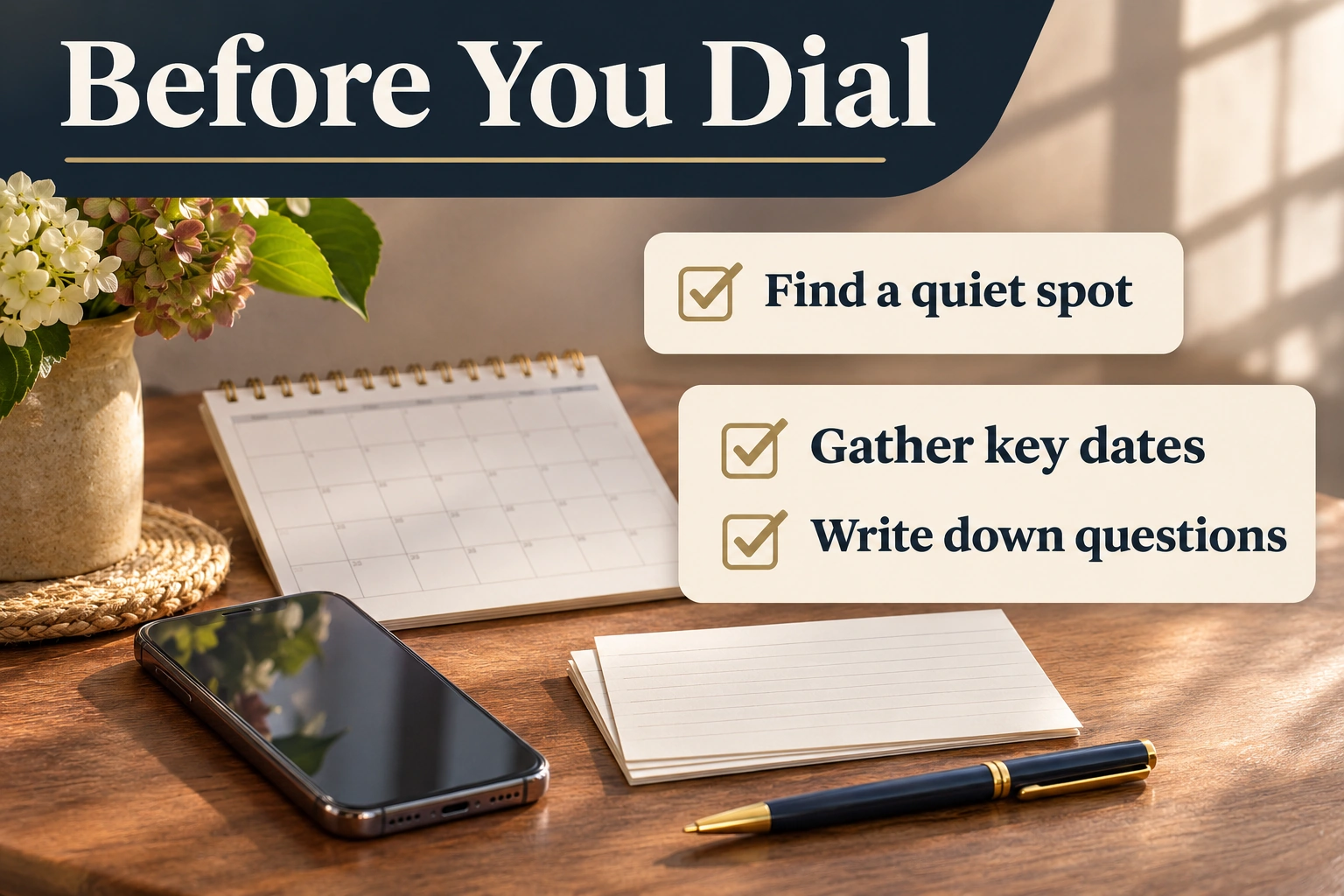
A first call needs no paperwork, but a few small things make it far more useful.
You do not have to tell the whole story on this call. People often worry that they will not be believed unless they explain everything from the beginning. A first conversation is about understanding the outline, so a few sentences are enough. More detail can come later, in private, if you decide to go ahead.
If you are nervous, it is fine to say so. You can say that you have never done this before, or simply read out what you have written down. Nobody expects a polished account of a hard time.

Calls vary, because situations vary. Most first conversations cover roughly the following ground, though not always in this order.
You will be asked who the discussion concerns: you, the other person, any children and possibly other family members. This establishes the shape of the situation, and helps to identify anything that might make a particular person’s involvement difficult.
Next comes the subject: arrangements for children, money and property, communication, or a mix of these. It helps to say what feels most pressing, even if you think other issues will need to follow.
You may be asked, or you may wish to say, whether there are concerns about safety, fear or pressure. Say only what you are comfortable saying. If you cannot speak freely at that moment, say so. The question matters because it affects whether mediation is suitable and how any meeting should be arranged.
You should come away knowing what would happen if you chose to go ahead, which for most people is an individual assessment meeting. You should also know how it would be arranged, what it would involve and what you need to do.
This is the time to ask about format, timing, costs and any access needs. Ask for anything you did not follow to be repeated. If you need time to think, say that as well.
It helps to see the whole route before you take the first step. Most cases follow this pattern, although yours may stop, pause or change shape at any point.
You call, ask your questions and explain the outline of your situation. Nothing is arranged unless you want it to be.
You meet a mediator individually, learn how the process works and discuss whether it suits your circumstances.
If it looks suitable and you are content to proceed, the other person is usually offered a meeting of their own, separately from yours.
After those meetings, the mediator considers whether joint work would be safe and useful, and which format it should take.
You work through an agreed agenda, together, by video or in separate rooms, at a pace that allows time for reflection and advice.
You review what has been reached, ask for a written summary of any proposals and take advice on whether and how to make them formal.
A consultation should leave you better informed, and you are entitled to ask direct questions. These are the ones we would ask in your position.
| Your question | Why it matters |
|---|---|
| What does the first meeting involve, and how long is it likely to take? | You can plan the time and know what you are preparing for. |
| Is there a charge for it, and what would later sessions cost? | Costs vary from case to case, so find out what applies to you before you agree. |
| Who would be my mediator, and what training and accreditation do they have? | You are choosing someone to guide a sensitive process, and it is reasonable to check. |
| How and when would the other person be contacted? | You may need to think about timing, safety or how they are likely to react. |
| Could we meet online or in separate rooms? | The format affects how comfortable and how safe the process feels. |
| What is confidential, and what are the limits? | You should know this before you share anything sensitive. |
| What are my options if mediation proves unsuitable or ends early? | It helps to understand your other options before you start. |
| Will I need a solicitor as well? | Mediators do not give legal advice, and you may want independent advice on any proposal. |

Most people’s first formal appointment is called a Mediation Information and Assessment Meeting, or MIAM for short. It is held between one person and a mediator.
The other person normally has a separate meeting of their own, so neither of you hears what the other has said unless that is later agreed.
The meeting has two purposes. The first is information: the mediator explains how mediation works, what it can and cannot do, how confidentiality applies and what other routes exist. The second is assessment: together you look at whether mediation is suitable for your situation, taking account of any concerns about safety, your own wishes and the issues to be resolved.
It helps to treat this as a meeting in which you are assessing the process too. Ask anything you want to. Say what worries you. Mention what the other person is like to deal with, if that is relevant, and what you would need in order to feel able to take part. There is no obligation to continue to joint sessions afterwards.
In England and Wales, anyone planning a family court application over children or money is usually expected to attend a MIAM first, although certain exemptions apply, including some involving domestic abuse or urgency. If a court application is in your mind, ask about this on the call and take legal advice on your own position. A mediator can tell you how the process works, but cannot advise you on what you should do.
An enquiry needs no permission from the other person, and you need not have spoken to them before you ring.
Many people call first because talking to the other person is the very thing that has become difficult. Where mediation looks suitable, they will usually be offered an individual meeting of their own. It is worth discussing how and when that invitation will be made and what they will be told, because timing can make a real difference to how it is received. If you have any fear about how they may react, raise this before anyone contacts them.
Nobody can be compelled to mediate. If the other person declines, joint mediation cannot go ahead in its usual form. Your own meeting can still be valuable, because you leave it understanding the process and what other options you might explore. You may also want to suggest that they call and ask their own questions, which often feels less threatening than being asked to sit down together.
Having a solicitor does not prevent you from mediating, and many people use both. Let your solicitor know you are thinking of mediation, and ask whether they have a view on timing. They may also be able to tell you whether a court date or a deadline affects your choices.
You do not need to bring a solicitor to the first call or to the sessions. Mediation usually takes place without lawyers in the room, with each person free to take advice between meetings. If you do not have a solicitor, that is also fine, although you may want advice before you finalise any proposal, especially where property, pensions or significant sums are involved.

Mediation does not have to mean sitting across a table from each other. Say on the call which of these you would prefer and, if you are comfortable doing so, why.
You and the other person sit down with the mediator. This allows the most direct exchange, and can move quickly when you are both able to listen. Breaks and individual time are still possible.
Each of you joins from a private place on your own device. This can help with distance, work patterns, childcare or anxiety about being in the same building. You will need a reliable connection and somewhere you will not be interrupted.
Known as shuttle mediation, this has the mediator moving between you and carrying proposals back and forth as you agree. It takes more time and coordination, but can make mediation possible when being together feels too hard.
The mediator will also have a view, especially if there are concerns about safety or a significant imbalance between you. The format can change later, too. Some people begin apart and decide to sit together for a final session, while others find that what looked manageable is better done at a distance.
If you are using video, check that no one else can hear the session, that children are occupied elsewhere and that you are not sharing a screen or device with someone else. If you are attending in person, ask how arrival and departure can be managed if you would rather not meet in a corridor or waiting room.

None of this is needed for your first call. Once you know which issues will be discussed, it can help to start collecting the following, and your mediator will tell you what is actually required.
If you reach this stage, the first session usually starts with practicalities: what the ground rules are, how confidentiality works, how long you will meet and when you can take breaks.
Each person normally gets a chance to say, without interruption, what they most want from the process. The mediator then helps you agree the order of the agenda, often starting with whatever is most urgent, or with something smaller that is likely to be settled quickly.
Do not expect to leave with everything resolved. A good first session may do no more than set out the issues, agree what information is needed and settle one pressing matter, such as arrangements for the next few weeks. That is real progress, because it gives you a way of working that you can build on.
These meetings can be draining, even when they go well. Try not to schedule one immediately before a shift, a school pick-up or anything else that requires you to be at your best. If possible, leave yourself some time afterwards to sit quietly, walk or make a cup of tea before going back to normal life.
It can also help to tell a friend or relative that the appointment is taking place, without expecting them to take a side. Decide in advance how you will reply if children ask where you have been or what was said. A short, honest and calm answer is usually enough for them.
During the meeting you can ask for a pause, a glass of water or more time with a question. You can say that you did not understand something and ask for it to be put differently. None of this will count against you. You are not being assessed on how well you cope.
Worry about cost stops many people from calling at all. It is perfectly acceptable to raise it early, and to say that money is tight. Ask what the first stage costs and how later sessions would be charged, and ask whether any help with costs, such as legal aid, could apply to you and whether this service can offer it. You can then weigh that up against the alternatives before you decide anything.
In an emergency, when you or anyone else is at immediate risk, contact the emergency services. Mediation is a planned process and cannot respond in time.
If you have an urgent legal problem, such as a deadline, a court date or a concern that a child may be removed, speak to a solicitor promptly, because waiting for a mediation appointment might not be appropriate.
If you are frightened of the other person, or worried about being overheard, think about where and when you will make any call, and whether it could be seen on a shared telephone bill or device. You are welcome to tell us that you cannot speak freely. Any concern will be treated seriously. It may mean that mediation is not the right path, and that is a perfectly acceptable outcome of a first conversation.
Write down what you were told while you still remember it: the next step, who will do what and any figures that were mentioned. Then give yourself time. You do not have to decide during the call, and you can ring back with further questions. It is quite common to think of the most important question only once the call has ended.
If you decide to go ahead, make sure you have had confirmation of the date, time, format and any charge before treating an appointment as booked. If you decide not to, no explanation is needed, and should your circumstances change, you can call again.
No. This website has no booking system or online form. A telephone enquiry on 0330 010 0028 is the way to begin.
No. A call is an enquiry. An appointment only exists once its details have been confirmed with you directly.
Please ask this directly when you call, so that you know exactly what the first conversation covers and whether any charge applies to the next stage. We do not quote prices on this page because costs vary from case to case.
No. You can ask your questions first. If you then decide to go ahead, how and when they are approached can be discussed with you.
A relative or adviser can ask general questions, but the decision to take part has to be your own, and the mediator will need to talk to you directly.
Mediation is usually between the people making the decisions. If you would like someone for support, or need an interpreter or other help, raise it before the meeting so that it can be discussed.
Call the same number as soon as you can. Any rules about changing or cancelling an appointment should be explained to you before it is confirmed, so ask about them then.
Online mediation exists for situations like this. Ask whether it would suit your circumstances.
Not necessarily. Separate rooms and video are both possible formats, and your first meeting is held individually in any case. Tell us early if being together is something you dread.
No. Mediation looks at what needs deciding next, so the reasons for a separation only matter where they affect safety or a decision that is in front of you.
We do not publish waiting times, because they depend on availability and on how quickly each person can take the first step. Ask on the call, especially if you have a deadline.
That is allowed. Mediation is voluntary, and you can decide not to go ahead. Check the position on any charge or notice before you confirm an appointment.
Have your questions to hand, find a private moment and call. You can decide what to do next once you have the answers.
0330 010 0028