What Finishes and Coatings Do
A finish or coating is a surface treatment applied to printed stock after the ink has dried. These treatments serve two distinct purposes: protection and aesthetics. On the protective side, coatings resist scuffing, moisture, and fingerprints, extending the usable life of a card. On the aesthetic side, they alter how light interacts with the printed surface, which directly affects perceived quality and brand character. Choosing the right finish is one of the most consequential decisions in business card production because it affects durability, print fidelity, and the tactile impression a recipient forms on first contact.
Finishes are typically applied either inline during the press run or as a separate offline process. Inline aqueous coatings cure quickly and add modest protection. Offline processes such as UV coating and lamination require dedicated equipment but deliver substantially more durable and visually dramatic results.
Common Finish Types
Gloss
Gloss finishes reflect light evenly across the card surface, making colors appear more saturated and images sharper. A gloss-coated card catches the eye under most lighting conditions. The tradeoff is that high-gloss surfaces show fingerprints readily and can be difficult to write on with a standard pen. Gloss is often the default for image-heavy designs and photography-based cards.
Matte
Matte finishes scatter light rather than reflect it, producing a flat, non-reflective surface. Colors read slightly softer than on gloss stock, but text legibility is often superior because there is no glare to compete with. Matte cards feel understated and tend to convey professionalism in industries where subtlety is valued. They accept handwriting more readily than gloss alternatives.
Soft-Touch (Velvet)
Soft-touch lamination applies a thin film that gives the card a velvety, almost rubberized feel. The tactile quality is distinctive and memorable — recipients frequently comment on the texture. Soft-touch surfaces are highly resistant to fingerprints, which is counterintuitive given how often they are handled. Colors print with a slightly muted, sophisticated tone. This finish adds meaningful thickness and rigidity to the card.
Satin
Satin sits between gloss and matte, offering moderate sheen without the full reflectivity of a high-gloss surface. It provides good color reproduction while remaining somewhat resistant to fingerprints. Satin is a versatile middle-ground choice when a design needs to look polished but not flashy.
Aqueous Coating
Aqueous coating is a water-based clear coat applied inline on the press. It dries quickly, is environmentally friendlier than solvent-based alternatives, and adds a layer of scuff protection. Aqueous coatings are available in gloss, matte, and satin sheens. While less dramatic than UV coating or lamination, aqueous is cost-effective and appropriate when a modest protective layer is all the job requires.
UV Coating
Ultraviolet (UV) coating is a liquid applied to the printed surface and then cured instantly under UV light. The result is an extremely hard, high-gloss shell that is more durable than aqueous coating. UV can be applied as a flood coat covering the entire card or as a spot treatment targeting specific design elements — a technique called spot UV. Because cured UV creates a distinct surface layer, cards with full UV coating cannot be easily written on and may not feed well through laser printers.
Specialty Techniques
Spot UV
Spot UV applies a gloss UV coating selectively to defined areas of an otherwise matte or uncoated card. The contrast between the dull background and the raised, reflective spot creates a dimensional effect that draws attention to logos, icons, or text. Spot UV requires a separate die or film to mask the non-coated areas, which adds to production time and cost but yields a premium result.
Foil Stamping
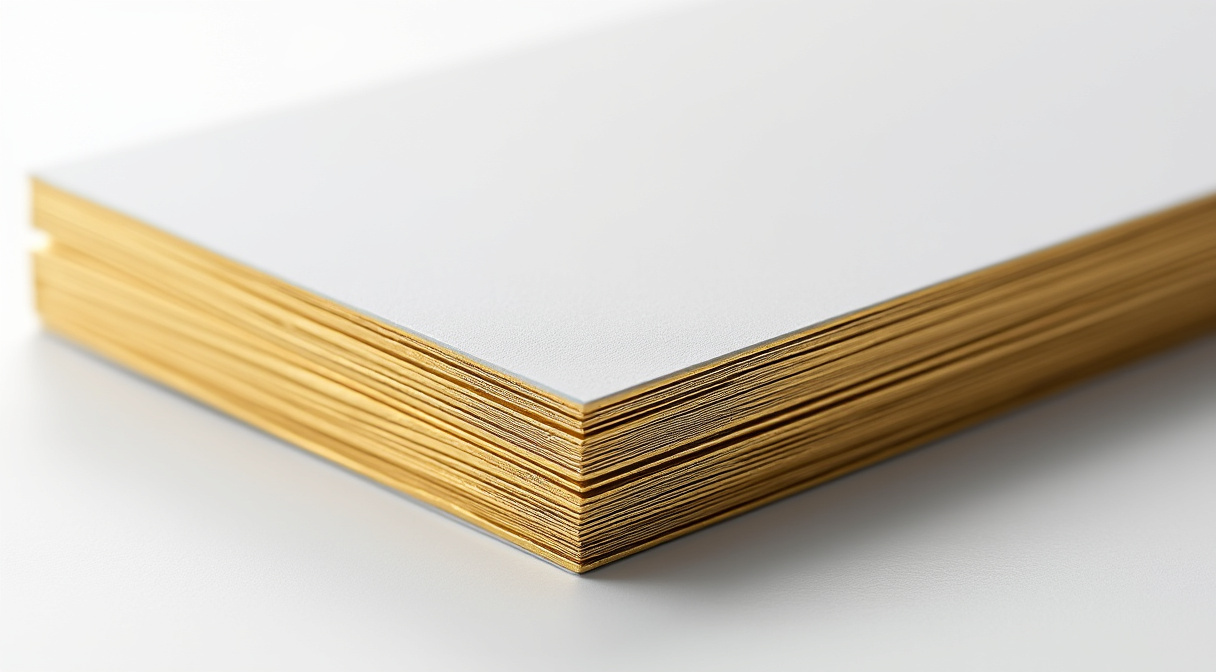
Foil stamping transfers a metallic or pigmented film onto the card using a heated die under pressure. Gold, silver, rose gold, and holographic foils are the most common choices. Foil does not mix with standard ink printing — it is always applied as a distinct step. The result is a bright, mirror-like surface that no ink or coating can replicate. Foil can be combined with embossing to create a raised, shiny effect simultaneously.
Embossing and Debossing
Embossing raises a design element above the card surface; debossing presses it below. Both processes use matched metal dies and apply pressure to create a three-dimensional impression in the stock. These techniques work best on thicker, uncoated, or soft-touch stocks where the relief is clearly visible and tactilely noticeable. Embossing is frequently paired with foil or spot UV for layered, high-impact results.
Matching Finish to Stock and Purpose
Not every finish is compatible with every stock. Soft-touch lamination requires a minimum card thickness to prevent curling. Spot UV demands sufficient contrast between the coated and uncoated areas to read clearly. Heavily textured stocks such as linen or laid paper do not take UV coating uniformly because the coating pools in the texture valleys.
- Coated stocks pair naturally with gloss or UV treatments because the base surface is already smooth.
- Uncoated stocks absorb ink differently and often pair better with matte lamination or no coating at all.
- Double-thick and triple-layer cards benefit from soft-touch or matte lamination, which reinforces the edges and prevents delamination.
- Cards intended to be written on — appointment cards, note cards — should be produced on uncoated or matte-laminated stock and avoid UV or full-gloss finishes.
Understanding the interaction between stock weight, coating chemistry, and intended use leads to more consistent results and fewer reprints. When durability is the priority, lamination outperforms coating alone. When visual drama is the goal, spot UV or foil stamping offer the greatest differentiation. Most professional print specifications define the finish alongside the stock rather than treating them as independent choices.
Further reference: https://en.wikipedia.org/wiki/Business_card · https://sites.google.com/emeryeps.com/vslprint-commercialprintingnyc/printing-nyc