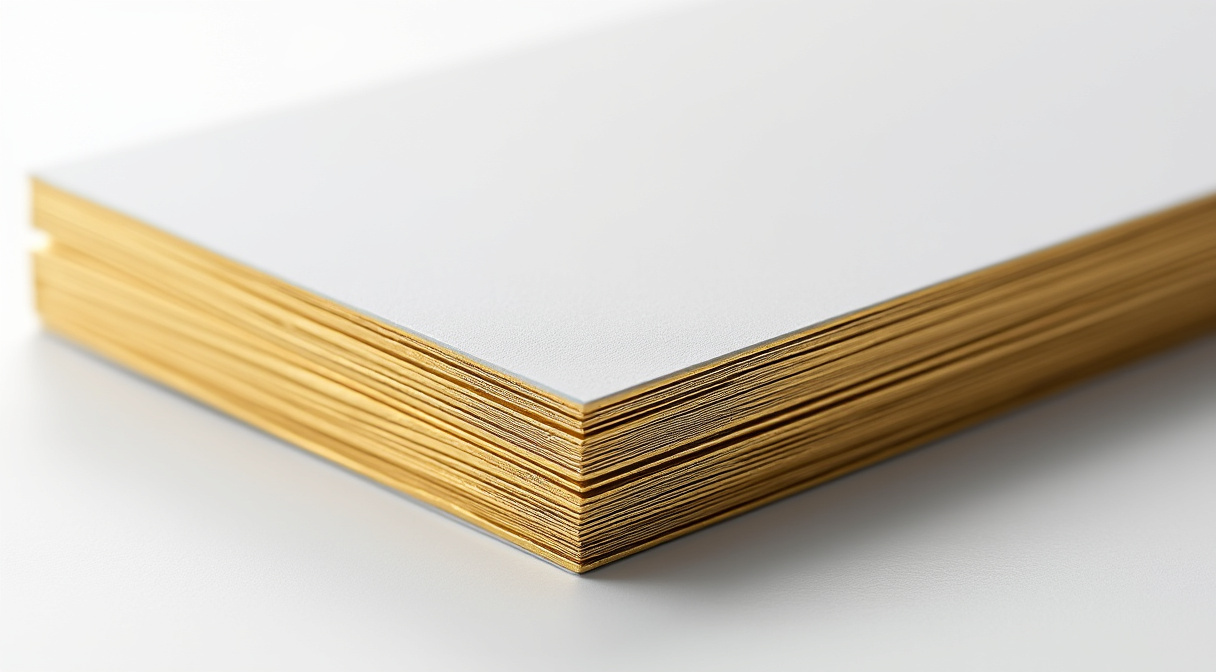
What Are Specialty Business Cards?
Specialty business cards are distinguished from standard cards by the use of non-conventional materials, construction methods, or finishing techniques that produce a tactile or visual effect beyond what offset or digital printing on plain card stock can achieve. They occupy a distinct tier in the printing industry, typically involving additional production steps, specialized equipment, or premium substrates that increase both cost and perceived value.
The category is broad. It encompasses cards printed on metal, wood, or plastic; cards with unusual shapes or die-cut edges; cards that incorporate functional elements like QR codes embossed in relief or NFC chips embedded in the substrate; and cards finished with techniques such as foil stamping, letterpress, or thermography. What unifies them is that the physical artifact itself communicates information about the cardholder before a single word is read.
Common Specialty Card Types
Die-Cut and Custom-Shape Cards
Standard business cards measure 3.5 by 2 inches, a dimension derived from early printing conventions and wallet compatibility. Die-cut cards depart from this rectangle using steel rule dies or laser cutters to produce rounded corners, notches, silhouette shapes, or entirely custom outlines. The process works with most paper and plastic stocks, though heavier substrates require more robust tooling. Custom dies have setup costs that are amortized across the print run, making larger quantities more cost-efficient per unit.
Foil and Metallic Cards
Foil stamping applies a thin metallic or pigmented film to the card surface using heat and pressure. The result can be gold, silver, holographic, or matte in appearance. Hot foil stamping is the traditional method, using a heated die pressed against the foil to transfer it to the substrate. Cold foil is a newer process that uses adhesive rather than heat, allowing for finer detail and compatibility with digital press workflows. Entirely metallic cards — made from aluminum, stainless steel, or brass sheets — are a separate category, printed or etched rather than stamped, and carry significantly higher production costs.
Letterpress and Engraving
Letterpress printing uses raised type or image plates pressed into soft, thick paper stocks to create an indented impression. The technique predates modern offset printing and is valued for the tactile depth it creates. Cotton and bamboo papers are commonly used because their soft fibers accept the impression cleanly. Engraving is the inverse process: ink is transferred from recessed areas in a metal plate, producing slightly raised text on the card's surface. Both methods require skilled setup and are slower than digital or offset runs, which is reflected in their pricing.
Plastic, Wood, and Alternative Material Cards
Plastic business cards are most often produced from PVC, the same material used in credit cards. They are waterproof, flexible, and durable. Printing is done via offset, digital, or screen printing, and the cards can be made fully transparent, frosted, or solid. Wood cards — typically thin sheets of birch, bamboo, or walnut veneer — are laser-engraved and appeal to brands in design, craftsmanship, or sustainability-oriented sectors. Cork, slate, and synthetic stone are also available from specialty vendors, each presenting unique handling and printing constraints.
Finishing Techniques That Define Specialty Cards
Many specialty cards combine a conventional substrate with one or more premium finishing processes rather than using an unconventional material. Understanding these finishes clarifies what drives cost and appearance in this category.
- Spot UV coating: A glossy UV-cured varnish applied selectively to specific design elements, creating contrast against a matte base.
- Soft-touch lamination: A velvet-like matte laminate that gives the card a rubberized, tactile feel and resists fingerprints.
- Edge painting: The trimmed edges of thick card stocks are hand-painted or roller-coated in a solid color, visible when the card is held at an angle.
- Thermography: A process that fuses resin powder to wet ink under heat, producing a raised, slightly glossy finish that approximates engraving at lower cost.
- Embossing and debossing: Pressure-only processes that raise or recess design elements without the addition of ink or foil.
Production and Practical Considerations
Specialty cards generally require longer lead times than standard offset runs because of the multi-step production sequences involved. A letterpress card with foil and painted edges, for example, may pass through three or four separate processes before finishing. Each handoff introduces potential for variation, and quality control between steps is essential to a consistent final product.
File preparation requirements are more demanding for specialty work. Foil and spot UV elements must be supplied as separate spot color layers in the print-ready file. Die lines for custom shapes must be provided as vector paths at exact dimensions. Printers producing specialty work typically supply detailed technical templates and specifications, and deviating from them is a common source of production errors.
Minimum order quantities for specialty cards are often higher than for standard runs because setup costs — dies, plates, foil rolls — are fixed regardless of quantity. Some digital-first finishing technologies have reduced minimums significantly, making short runs of specialty cards more accessible than they were a decade ago, though the per-unit cost remains substantially higher than commodity printing.
Further reference: https://en.wikipedia.org/wiki/Business_card · https://sites.google.com/emeryeps.com/vslprint-commercialprintingnyc/printing-nyc