
Where This Started
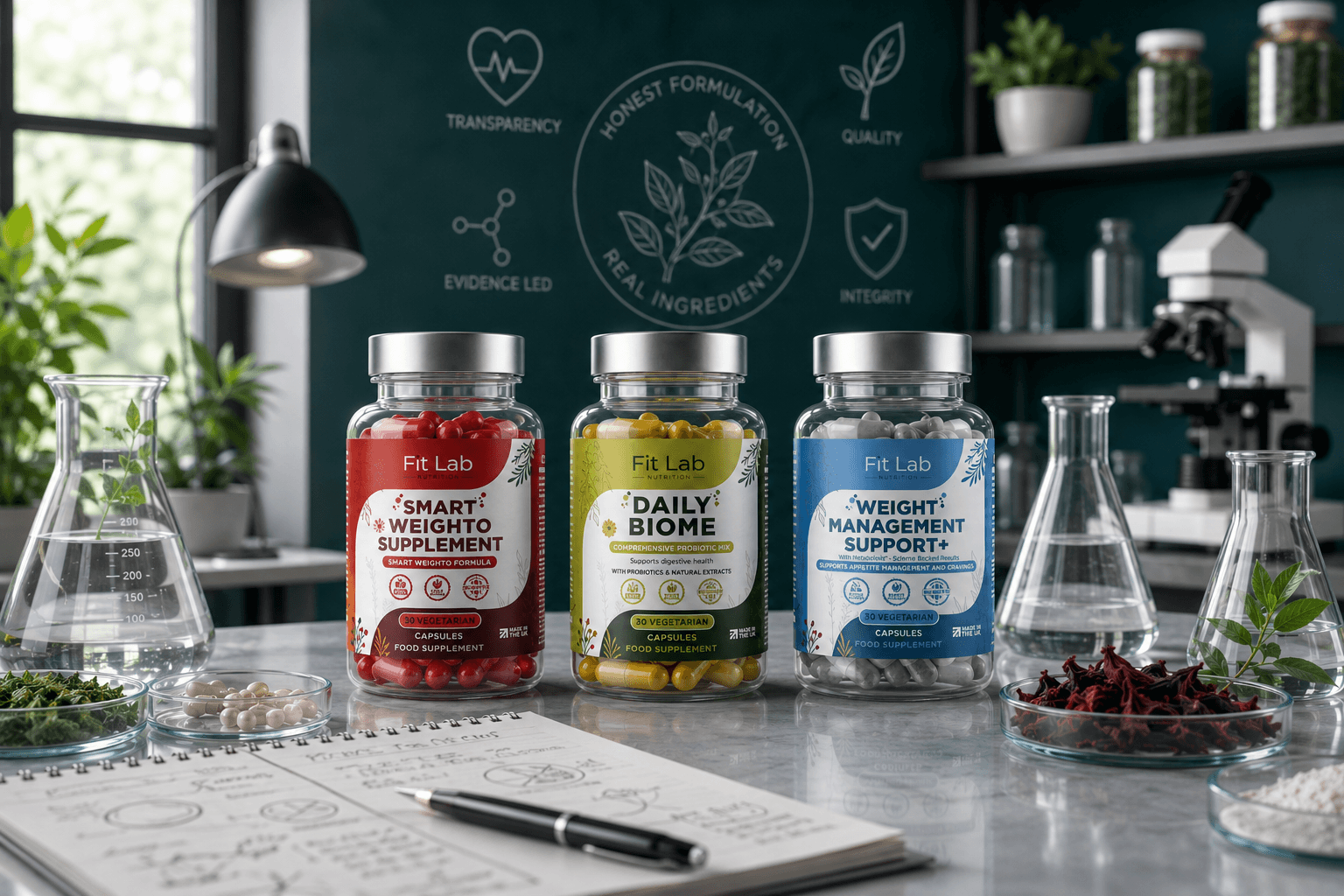
Fitlab Nutrition did not begin with a business plan or an investor pitch. It began with a frustration that anyone who has ever stood in a supplement aisle will recognise. The labels were dense, the language was confident, and the gap between what was promised and what was actually in the bottle was almost impossible for a customer to close.
That gap is not an accident. The supplement industry has developed, over decades, a sophisticated set of habits designed to obscure rather than clarify. Proprietary blends that hide individual ingredient quantities behind a single combined figure. Impressive-sounding ingredient lists where half the actives are present at doses too low to produce any measurable effect. Claims that sit carefully on the edge of what regulations allow, never quite crossing the line but never quite telling the truth either.
The founding question behind Fitlab Nutrition was straightforward. What would a supplement brand look like if it were built entirely around the interests of the person taking the product, rather than the interests of the person selling it? Not as a slogan, but as an operating principle applied to every formula, every label, and every piece of information published alongside the range.
The answer turned out to be a small range. Three products covering three distinct areas of everyday health: energy and focus, gut health, and weight management support. Not thirty products, not a seasonal launch calendar, not a subscription model designed to make it difficult to stop. Three things, done carefully, with every ingredient declared at its full dose, and every claim anchored to what the research actually says rather than what the marketing department wishes it said.
That restraint is deliberate. A small range is harder to justify commercially because it limits revenue. But it is far easier to stand behind, because every formula can be examined, questioned, and defended in detail. A business that makes three products can know those products inside out. A business that makes fifty is, almost inevitably, relying on template formulations and hoping nobody checks the maths.
The Values That Shape the Work
Values statements in business are easy to write and difficult to enforce. Most companies have them, most customers ignore them, and there is good reason for both. What matters is not the statement but the behaviour it produces. The values behind Fitlab Nutrition are best understood as constraints, things the brand will not do, even when doing them would be commercially advantageous.
Ingredient Integrity Above Label Impressiveness
There is a persistent temptation in supplement formulation to build long ingredient lists. A label showing twenty-five actives looks more thorough than one showing five. The problem is that a capsule has a finite capacity, and when you divide that capacity among twenty-five ingredients, most of them end up present at quantities too small to have any physiological effect. The label exists for the label's sake, not for the customer's benefit.
Fitlab Nutrition takes the opposite approach. Every ingredient in every formula is there because the research supports its inclusion at the dose provided. If the research on a promising ingredient is preliminary or inconclusive, it stays out of the formula until the evidence matures. If an ingredient cannot be included at a meaningful dose within the capsule format, it is not included at a meaningless one. This produces shorter ingredient lists and less impressive-looking labels. It also produces formulas that have a genuine rationale behind every component.
Dose Transparency as a Non-Negotiable
The proprietary blend is one of the supplement industry's most effective tools for obscuring what is actually in a product. The blend is declared as a single total weight, with the individual ingredients listed in descending order but without their individual quantities. This means the first ingredient in a blend could account for ninety percent of the total weight, with the remaining ingredients splitting the last ten percent between them. A customer looking at that label has no practical way of knowing whether any individual ingredient is present at a dose that reflects the research, or at a token amount included purely so it can appear on the label.
Fitlab Nutrition does not use proprietary blends. Every active ingredient is declared individually with its own quantity per serving. This is a straightforward commitment and it has a straightforward consequence: anyone who wants to compare the formula against the published research can do so, because the numbers are visible. A brand confident in its dosing has no reason to hide behind a blend figure, and a customer comparing products deserves the information needed to make that comparison meaningful.
Honesty About What Supplements Can and Cannot Do
Supplements are food products, not medicines. In the United Kingdom, the claims that can be made about food supplements are regulated, and those regulations exist for good reason. A capsule cannot diagnose, treat, cure, or prevent any disease. It cannot substitute for a balanced diet, adequate sleep, regular movement, or medical treatment. It cannot undo the consequences of a fundamentally unhealthy lifestyle.
What a well-formulated supplement can do is support specific aspects of everyday health when the fundamentals are broadly in place. That is a modest claim, and Fitlab Nutrition is comfortable with it precisely because it is honest. The product descriptions on this site spend as much time explaining who a product is not suitable for as who it is suitable for. That costs sales and saves bad experiences, and the trade is worth making every time.
This extends to the language used across the brand. There are no transformation promises, no before-and-after narratives, no implications that a capsule will produce results that only sustained lifestyle change can deliver. The tone is deliberately measured, because the moment a supplement brand starts sounding like a miracle cure, it has stopped being trustworthy.
A Commitment to a Small Range
The commercial logic of the supplement industry pushes relentlessly towards more products. More products mean more shelf space, more cross-selling opportunities, more reasons for a customer to return. Resisting that logic is a deliberate strategic choice with a real cost.
Fitlab Nutrition maintains a range of three products because three is the number that can be formulated carefully, tested thoroughly, and supported with genuine expertise. Expanding beyond that number would mean either diluting the attention given to each formula or relying on generic formulations developed by third-party manufacturers to a price point rather than a standard. Neither option is acceptable.
The result is a brand that does not have something for everyone. If your needs fall outside the three areas the range covers, Fitlab Nutrition is not the right brand for you, and that is a perfectly reasonable outcome. A supplement company that tries to cover every possible need is a supplement company that covers most of them poorly.
How Formulation Works in Practice
The journey from a research paper to a finished capsule is longer and more technical than most people expect. Understanding how that journey works helps explain why two products listing the same ingredients can behave very differently in practice.
Starting with the Research
Every formula begins with the published literature. The question is not whether an ingredient sounds promising, but whether there is a sufficient body of peer-reviewed research to support its use at a specific dose for a specific purpose. Preliminary studies, animal studies, and in-vitro research are noted but not treated as sufficient evidence for inclusion. The threshold is human clinical data, ideally replicated across multiple studies, demonstrating a measurable effect at a defined dose.
This rules out a great deal. Trend-led ingredients that appear in every product for a season and then quietly disappear almost always fail this test. So do ingredients where the research is genuinely interesting but not yet mature enough to justify asking someone to take them daily. The result is that Fitlab Nutrition formulas tend to contain well-established ingredients rather than novel ones, and that is a deliberate choice. Novelty is interesting in research; in a product someone takes every morning, reliability matters more.
Choosing the Right Form
Many nutrients and botanical compounds exist in multiple chemical forms, and the differences between those forms can be substantial. Bioavailability, the proportion of an ingested compound that actually reaches systemic circulation in a usable form, varies significantly depending on the chemical structure. A cheaper form of an ingredient is usually cheaper because it is less well absorbed, less stable, or both.
Fitlab Nutrition selects ingredient forms based on the bioavailability data rather than the price list. This decision is invisible on the front of the pack but is one of the single largest determinants of whether a product does what the label suggests it should. Standardised botanical extracts, specified to a defined percentage of active compounds, are used wherever the research supports standardisation. This ensures that the concentration of the active compound is consistent from batch to batch, rather than varying with growing conditions, harvest timing, and extraction method.
Manufacturing to Good Manufacturing Practice
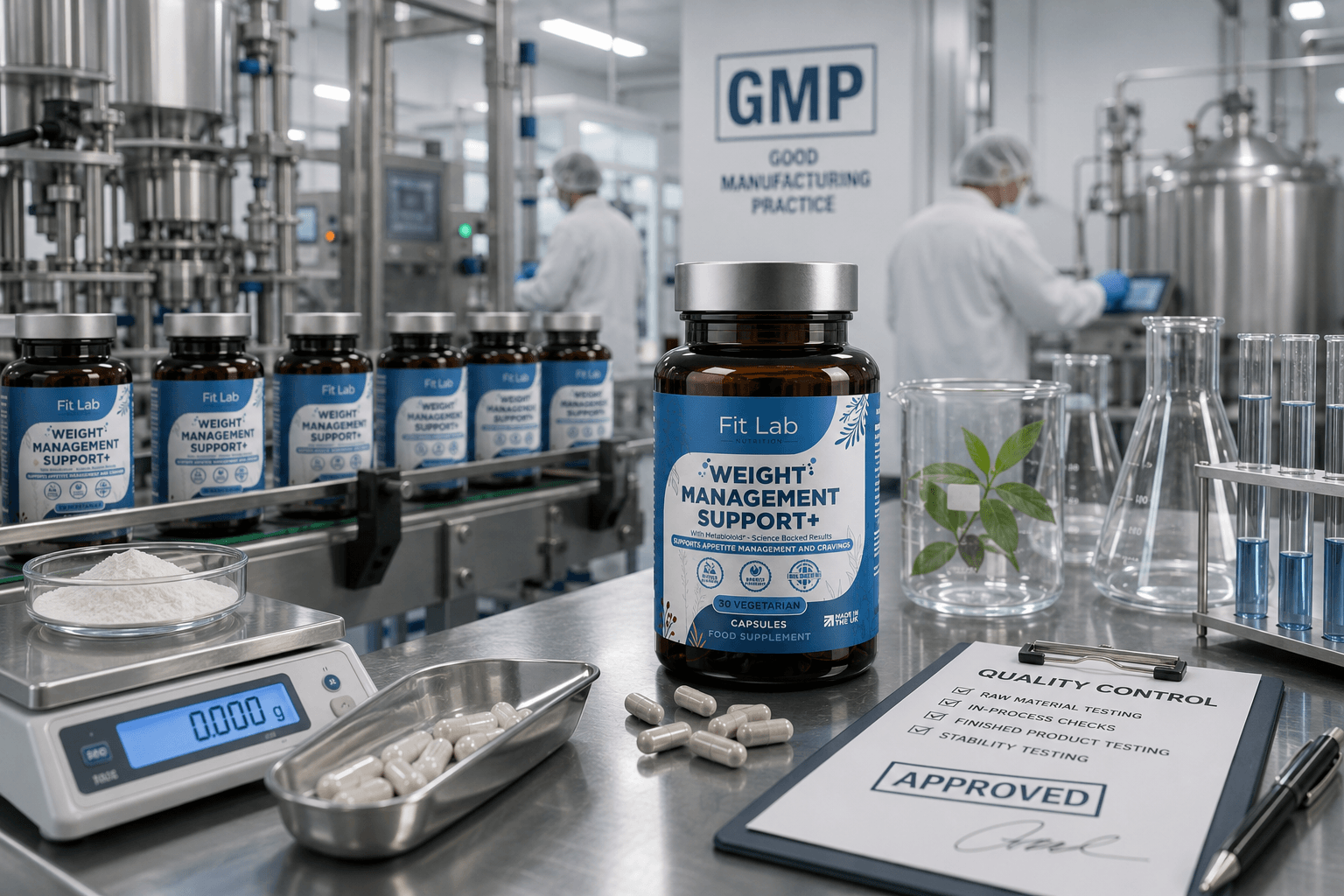
All Fitlab Nutrition products are manufactured in the United Kingdom in facilities operating to Good Manufacturing Practice standards. GMP is not a marketing badge. It is a systematic framework governing every stage of production, from raw material receipt through to finished product release.
In practical terms, GMP means that raw materials are tested for identity and purity on arrival. Production processes are documented and repeatable. Equipment is cleaned and validated between production runs to prevent cross-contamination. Finished batches are tested before release to confirm that the declared actives are present at the declared levels. Batch records are maintained so that any finished product can be traced back through every component to its source.
This sounds bureaucratic, and it is. Bureaucracy in manufacturing is the mechanism that prevents errors from reaching the customer. A production facility that cannot answer the question "what exactly went into this batch, and where did each component come from" with a documented answer is a facility operating on trust rather than evidence, and trust is not a substitute for documentation.
Stability and Shelf Life
A supplement is not finished when it leaves the factory. It then travels through a distribution chain, sits in a warehouse, and waits in a kitchen cupboard for weeks or months before the bottle is finished. Some ingredients are perfectly stable through all of this. Others degrade on exposure to heat, light, oxygen, or moisture, and a product that met its label on day one can fall well short by the end of its shelf life.
Live cultures are the most obvious example. The viable count of a live culture product declines steadily over time, which is why a responsible formulation includes overage, a higher count at manufacture than the label declares, calculated so that the stated count is what remains at the end of shelf life rather than what went in at the start. This is an unglamorous piece of formulation engineering and it is the difference between a label that means something for the life of the product and a label that flatters the pack on day one and misleads the customer by month twelve.
Best-before dates at Fitlab Nutrition follow from stability data. Storage advice on the label reflects the conditions under which that stability data was generated. Both are worth following, because they directly affect whether the product performs as intended throughout its usable life.
Independent Testing and Why It Matters

Third-party testing is the most substantive quality marker a supplement brand can offer, and it is also the least visually exciting. It does not produce a colourful badge or a memorable slogan. What it produces is evidence, generated by a laboratory with no commercial interest in the result, that what the label says is what the capsule contains.
The importance of independence is simple. A manufacturer testing its own products is marking its own homework. The incentive to find a favourable result is built into the relationship. An external laboratory has no such incentive. The test either confirms that declared actives are present at declared levels, and that contaminant levels sit within defined limits, or it does not. There is no grey area and no negotiation.
Contaminant screening deserves particular attention because it addresses risks that are invisible to the consumer. Heavy metals such as lead, cadmium, arsenic, and mercury occur naturally in soil and can accumulate in plant material. Botanical and mineral ingredients are the ones that need watching most closely. There is no taste, appearance, or texture that would alert you to contamination. The only protection is testing at the raw material stage and again on the finished batch, with defined limits that a batch either meets or does not meet.
Microbial testing works on the same principle, confirming that yeast, mould, and bacterial counts sit within acceptable limits before anything is released for sale. These are not exotic concerns. They are the baseline hygiene standards that separate a responsible manufacturer from one that is simply bottling ingredients and hoping for the best.
Fitlab Nutrition treats third-party testing as a baseline requirement rather than a differentiator. It is not a reason to buy the product. It is a reason to be confident that the product contains what it says it contains, in the quantity stated, at the point of sale. That confidence should be the minimum expectation for any supplement, and the fact that it is not says more about the industry than it does about the testing process.
Dietary Standards and Accessibility
All three products in the Fitlab Nutrition range are suitable for vegetarians and vegans, gluten free, and non-GMO. The capsule shells are plant-based cellulose rather than gelatine, which is an animal-derived protein. The formulas are free from pork and beef gelatine, eggs, nuts, fish, and lactose.
These are not marketing positions. They are practical decisions about accessibility. A supplement taken daily for months at a time needs to fit into a real life, including the dietary requirements, allergies, ethical choices, and religious observances that shape what someone can and cannot consume. A product that is effective but incompatible with a customer's dietary framework is not a useful product for that customer.
Allergen management extends beyond the formula itself to the manufacturing environment. Shared equipment and production lines are common in supplement manufacturing, and without documented cleaning and validation procedures between production runs, cross-contamination is a genuine risk. The facilities used by Fitlab Nutrition operate documented allergen management procedures as part of their GMP compliance.
Labelling reflects these commitments accurately. Regulated terms such as "gluten free" carry defined thresholds in UK food law and are not used loosely. Vegan suitability means no animal-derived ingredient appears anywhere in the formula, including in processing aids and carriers that are easy to overlook. Non-GMO status is a sourcing and documentation commitment maintained through the supply chain. Each of these claims is verifiable, and each is verified.
Sourcing, Traceability, and Responsibility
Sustainability claims in the supplement industry are frequently louder than the underlying practice. Fitlab Nutrition describes its current position rather than its aspirations, because aspiration is easy to announce and difficult to verify.
Supplier Selection and Documentation
Ingredient suppliers are selected on documentation as much as on price. That means certificates of analysis for every batch, clear country-of-origin information, and the ability to answer questions about handling, processing, and storage. A supplier who cannot produce paperwork on request is not a supplier worth using, regardless of what they are quoting.
Some ingredients are grown or produced in a small number of regions worldwide, and no amount of preference changes that. Local sourcing is not available for much of what goes into a supplement. What is available is knowing exactly where something came from and holding the supplier to a documented standard, which is the level of control that genuinely exists at this scale.
Batch Traceability
Every finished batch produced for Fitlab Nutrition can be traced back through its component raw materials to their source. This exists primarily as a safety mechanism. If a concern is ever raised about a specific ingredient lot, whether from a supplier notification, a customer query, or an industry alert, traceability is what makes it possible to identify precisely which finished batches are affected, rather than recalling an entire product line on the basis of uncertainty.
Traceability also supports the batch testing process. When a third-party laboratory tests a finished batch and confirms that actives are present at declared levels and contaminants are within limits, that confirmation is linked to a specific set of raw material batches with their own documentation. The chain of evidence runs from the field where a plant was grown through to the capsule in the customer's hand.
Packaging Realities
Supplement packaging involves a genuine tension. Capsules need protection from moisture, light, and oxygen to remain stable for their full shelf life, and the materials that do that job best are not always the easiest to recycle. Reducing packaging weight where it does not compromise stability is achievable. Claiming the problem is solved would be dishonest.
Bottles used across the range are widely recyclable through kerbside collection in most UK local authorities. Cartons and inserts are recyclable card. Where there is a choice between a material that performs better as a moisture barrier and one that is easier to recycle, the decision is made in favour of product stability, because a product that degrades before the customer finishes the bottle has wasted everything that went into producing it.
Fitlab Nutrition is a small operation, and small operations have less influence over their supply chains than large ones. Progress in this area is incremental, and anything described here is something already in place rather than a target being worked towards. There is more to do, and stating that openly is more useful than pretending otherwise.
The Three Pillars of Everyday Health
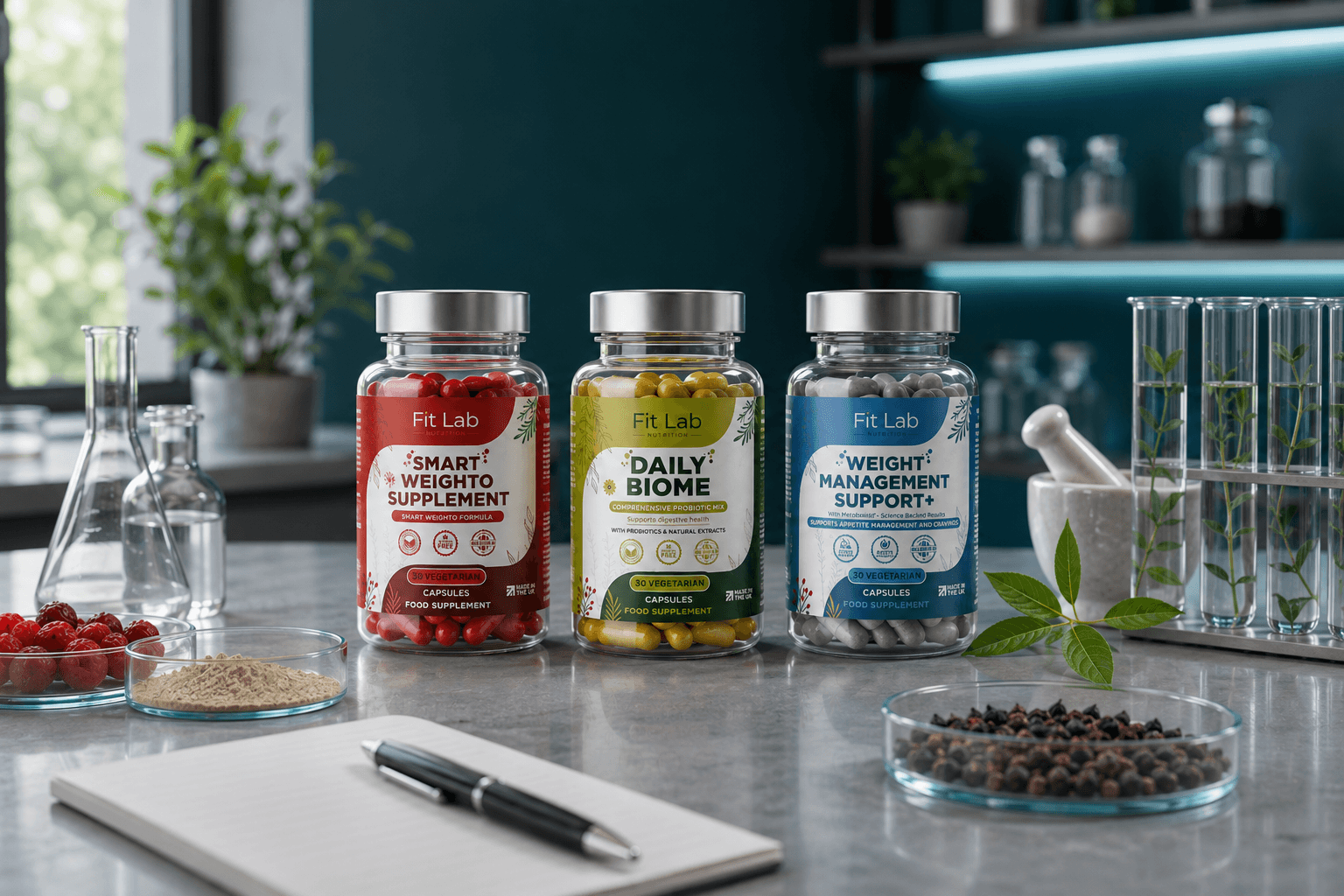
The Fitlab Nutrition range is organised around three areas that the research identifies as foundational to everyday wellbeing: energy and focus, digestive health, and metabolic balance. These are not niche concerns. They are the areas where most people first notice that something in their daily routine is not working as well as it should.
Energy and Mental Clarity
Energy is the resource that determines whether the rest of the plan happens. Training intentions, dietary discipline, work productivity, and the patience required to manage a household all depend on having enough energy to sustain them. When energy fails, everything downstream fails with it.
The energy formula in the Fitlab Nutrition range is built around caffeine and green tea extract, two of the most thoroughly researched compounds in the energy and performance space. The pairing is intentional: research suggests the combination produces a more sustained and meaningful effect on alertness and energy expenditure than either compound alone. The caffeine is naturally sourced from plant material, and the green tea extract is standardised for its EGCG content, ensuring a consistent dose of the active catechin in every capsule.
Digestive Balance and Gut Health
The gut is increasingly recognised as central to broader health outcomes, influencing everything from nutrient absorption and immune function to mood and cognitive performance. A gut that is not working efficiently affects the return on every other investment in health, from the food you eat to the supplements you take.
The gut formula takes a multi-layered approach, addressing five distinct elements of digestive health in a single daily capsule: live cultures across three researched strains, prebiotic fibre from chicory root inulin, four traditional digestive botanicals including turmeric, ginger, dandelion, and marshmallow root, L-glutamine for gut lining support, and black pepper extract to enhance the absorption of curcumin. This synbiotic approach, combining probiotics with the prebiotics that sustain them, reflects the current understanding that gut health requires more than live bacteria alone.
Metabolic and Weight Management Support
Weight management is governed by energy balance, and no supplement changes that fundamental arithmetic. What a well-formulated botanical supplement can do is support the behavioural and physiological aspects that make sustained energy balance difficult to maintain. Appetite signalling, cravings, and the hormonal feedback loops that intensify hunger during caloric restriction are real physiological phenomena, not personal failings.
The metabolic formula is built around a patented botanical pairing of hibiscus and lemon verbena, standardised and combined at a defined ratio, with chromium contributing to the maintenance of normal macronutrient metabolism and normal blood glucose levels. The formula is stimulant-free, contains no caffeine, and is designed to work alongside the body's own satiety signalling rather than attempting to suppress appetite through stimulation.
What Being UK-Based Actually Means
Being a UK-based brand means more than having a registered address in the United Kingdom, though that is part of it. It means that the products are manufactured in UK facilities under UK regulatory oversight, that the supply chain is shorter and more traceable than one routed through multiple international intermediaries, and that the company operates within a legal and regulatory framework that can actually be enforced.
UK food supplement regulation is governed by a combination of EU-retained law and domestic legislation, enforced by local authority trading standards and overseen at a national level by the Food Standards Agency. Claims made about food supplements are regulated under the nutrition and health claims framework, which requires that any health claim is substantiated by scientific evidence and authorised for use. This framework is imperfect, but it provides a level of consumer protection that is absent in many other markets.
Manufacturing under GMP in the UK also means shorter lead times, more direct oversight of production processes, and the ability to visit and audit manufacturing facilities without the logistical complexity of international travel. For a small brand like Fitlab Nutrition, this proximity matters. It enables a closer relationship with the manufacturing partner and a more detailed understanding of how each batch is produced.
The company itself, Fitlab Nutrition Limited, is registered in England and Wales. The registered office is at Seven Grange Lane, Pitsford, Northampton, United Kingdom, NN6 9AP. Company information is publicly available through Companies House, as it should be for any business asking customers to trust what it puts in their bodies.
The Relationship Between Brand and Customer
The supplement industry has a trust problem, and it has earned it. Decades of overclaiming, underdosing, and obfuscation have produced a customer base that is understandably sceptical of any brand's claims about itself. Fitlab Nutrition does not expect to overcome that scepticism through rhetoric. It expects to overcome it through behaviour.
That behaviour includes publishing full ingredient quantities rather than hiding behind blends. It includes spending as much time explaining who a product is not for as who it is for. It includes maintaining product descriptions that discuss limitations and caveats alongside benefits. It includes answering ingredient questions with specific information rather than marketing language. And it includes accepting that some customers will decide, based on the information provided, that the product is not right for them, and treating that as a successful outcome rather than a lost sale.
The written guidance published alongside the product range reflects the same philosophy. Material covering hydration, nutrition for metabolic health, and gut bacteria diversity is written on the assumption that a customer who understands the fundamentals will get more from a formula, stay with it longer, and be considerably less disappointed. A supplement taken alongside adequate sleep, sensible eating, and regular movement is a supplement working with the current rather than against it. A supplement taken in the absence of those things is doing the harder half of the job on its own, and no amount of formulation quality changes that.
There is commercial logic in encouraging people to believe that a capsule is the answer, because it sells more capsules. It is also untrue, and the people who fall for it tend to spend a year cycling through products before concluding that none of them work. Fitlab Nutrition would rather have fewer customers who understand what they are taking and why, than more customers who expect something no supplement can deliver.
Looking Ahead with Measured Ambition
Growth for its own sake is not a goal. The intention is to continue improving the existing range, to deepen the evidence base supporting each formula, and to refine the manufacturing and sourcing processes that determine product quality. If the evidence supports a fourth product in the future, it will be developed to the same standard as the existing three. If it does not, the range will remain at three, and that will be the right decision.
The written resources published alongside the range will continue to expand, covering the fundamentals of nutrition, supplementation, and everyday health in a tone that respects the reader's intelligence without assuming specialist knowledge. The aim is to make the information that matters most accessible to the people who need it, without the sensationalism, oversimplification, or commercial motivation that characterises much of what currently circulates online.
Fitlab Nutrition is a small brand with a limited range and a specific set of principles. It does not try to be everything to everyone. It tries to be genuinely useful to the people for whom its products are appropriate, and genuinely honest with the people for whom they are not. That is the whole of the ambition, and it is enough.
If you have questions about any product in the range, including questions about specific ingredients, doses, suitability, or interactions with medication, you are welcome to get in touch. Enquiries are answered by someone who knows the products. If the honest answer is that a product is not suitable for you, that is the answer you will receive.