
Where It Starts
Most people don't buy their first supplement because they've read a study. They buy it because it's four in the afternoon and they've got nothing left. Or because their stomach has been unpredictable for a fortnight and they can't work out why. Or because the gym has started to feel like a chore rather than a release.
Then comes the difficult bit. You stand in the aisle, or you scroll, and everything says more or less the same thing. Advanced. Clinical strength. Premium complex. The bottles look confident. The labels are dense. And somewhere in the small print there's a proprietary blend that tells you almost nothing about how much of anything you're actually getting.
Fitlab Nutrition exists because that gap between the marketing and the label is a genuine problem, and it's a solvable one. Every formula in the range is built to be readable. You can see what's in it, how much of it there is, and why it's there at all. Nothing is hidden behind a blend name to disguise a token dose.
The range itself is deliberately small. Three products, covering everyday energy, gut health and weight management support. Not thirty. There's no ambition here to have something for everyone, because most people only need one or two things done properly.
What follows is an honest account of how the formulas are put together, what the science does and doesn't say, and how to work out whether any of this is relevant to you. If the answer turns out to be no, that's a perfectly good outcome too.

The Principles Behind Every Formula
"Evidence-based" has become one of those phrases that means very little because everyone uses it. Worth pinning down what it actually means in practice, because it makes a real difference to what ends up in the bottle.
For Fitlab Nutrition, it comes down to three working rules.
The first is that an ingredient earns its place or it doesn't go in. There's a temptation in this industry to build a long ingredient list because it looks impressive on the back of the pack. Twenty-eight botanicals sounds thorough. In reality it usually means each one is present in a quantity too small to do anything, and the list exists for the label rather than for you.
The second is dose honesty. Plenty of supplements contain a genuinely well-researched ingredient at a fraction of the amount used in the research. That's not a formulation, it's a reference. If a study used a specific quantity to produce an effect, then putting a tenth of that quantity into a capsule doesn't give you a tenth of the effect. It usually gives you nothing at all, plus the cost of the packaging.
The third is that the claim has to match the evidence. This is where a lot of the sector loses the plot. Supplements are food products, not medicines, and in the UK there are clear rules about what you can and can't say. Those rules are sensible. A capsule cannot fix a bad diet, undo a run of four-hour nights, or replace medical treatment. Anything written on a Fitlab Nutrition label or page is written to sit comfortably inside what's actually known.
There's a fourth principle that's harder to write into a formula but matters just as much. If a supplement isn't right for you, you should be able to work that out before you buy it, not three weeks in. Which is why the product descriptions on this site spend as much time on who something isn't for as on who it is for. A caffeinated formula is genuinely unsuitable for some people. Saying so costs a sale and saves a bad experience, and that trade is worth making every time.
There's also a question of restraint that doesn't get talked about much. The commercial logic of this sector pushes constantly towards more products, because more products mean more chances to sell something. Resisting that is a deliberate decision with a cost. A three-product range means turning down obvious extensions and accepting that some customers will look elsewhere for things this range doesn't cover. That seems a reasonable price for being able to stand behind everything on the shelf.
None of this is a radical position. It's simply what you'd expect if the person making the product had to take it themselves.
How the Formulations Come Together
The distance between a good ingredient and a good product is larger than most people expect. Two supplements can list identical ingredients and behave completely differently once you take them.
Selection Comes Before Everything
The first decision is which form of an ingredient to use. Many nutrients exist in several chemical forms, and they aren't interchangeable. Some are absorbed readily; some pass through largely untouched. Some are stable on a warehouse shelf for two years; some degrade within months. The cheaper form is usually cheaper for a reason, and that reason is often absorption.
Fitlab Nutrition works from the research on bioavailability rather than from the price list. That decision is invisible on the front of a pack and it's one of the largest single factors in whether a product does anything.
Dose Transparency and Why It Matters
A meaningful dose is one that reflects the amount used in the research that supports the ingredient's use. A token dose is anything materially below that.
Proprietary blends are where token doses tend to hide. The blend is declared as a total weight, so you might see 850mg of a named complex containing eleven ingredients. What you can't see is that the first ingredient could account for 800mg of that and the remaining ten split the last 50mg between them. Legally that's fine. Practically, it means the label is telling you almost nothing.
Fitlab Nutrition doesn't use blends of that kind. Every active is declared individually, with its own quantity, so the maths is available to anyone who wants to do it.
Nothing Added for the Sake of It
Capsules need a small amount of processing help to be made at all. Flow agents stop powder sticking to machinery, and some ingredients need a carrier to be dosed accurately. That's normal manufacturing, not a scandal.
What's avoidable is everything added purely for appearance. Colourings that make a capsule look more potent. Sweeteners in a product nobody tastes. Bulking agents that fill space so the capsule feels substantial. None of that contributes anything, and it's all left out.
Made in the United Kingdom to Recognised Standards
Manufacturing happens in UK facilities working to Good Manufacturing Practice. In practical terms, GMP means the process is documented at every stage, raw materials are checked on arrival, batches are traceable, and equipment is cleaned and validated between production runs.
It sounds bureaucratic because it is. That's the point. GMP is what allows a manufacturer to answer the question "what exactly went into batch number 4471, and where did each component come from" with a document rather than a shrug.
Raw materials are tested on arrival for identity and purity, and finished batches are checked before release. The aim is straightforward: what the label says should be what's in the capsule, in the quantity stated, for the whole of the product's shelf life.
Stability as Part of the Formulation
That last phrase does a lot of work. A supplement isn't finished when it leaves the factory. It then sits in a warehouse, travels in a van, and waits in a kitchen cupboard for a couple of months before you finish the bottle. Some ingredients are perfectly happy with all of that. Others degrade steadily on exposure to heat, light, oxygen or moisture, and a capsule that met its label on day one can fall well short by month eighteen.
Live cultures are the clearest example. Their viability declines over time, which is why a responsible product is formulated so the count stated on the label is what remains at the end of shelf life, not what went in at the start. Overage is built in for exactly this reason. It's an unglamorous piece of engineering and it's the difference between a number that means something and a number that flatters the pack.
Best-before dates follow from stability data rather than from a rounded guess. Which is also why storage advice on the label is worth following rather than skipping.
Understanding the Range
Three products. Each one addresses a distinct area, and each is designed to work as part of an ordinary diet rather than in place of one.
Smart Weighto
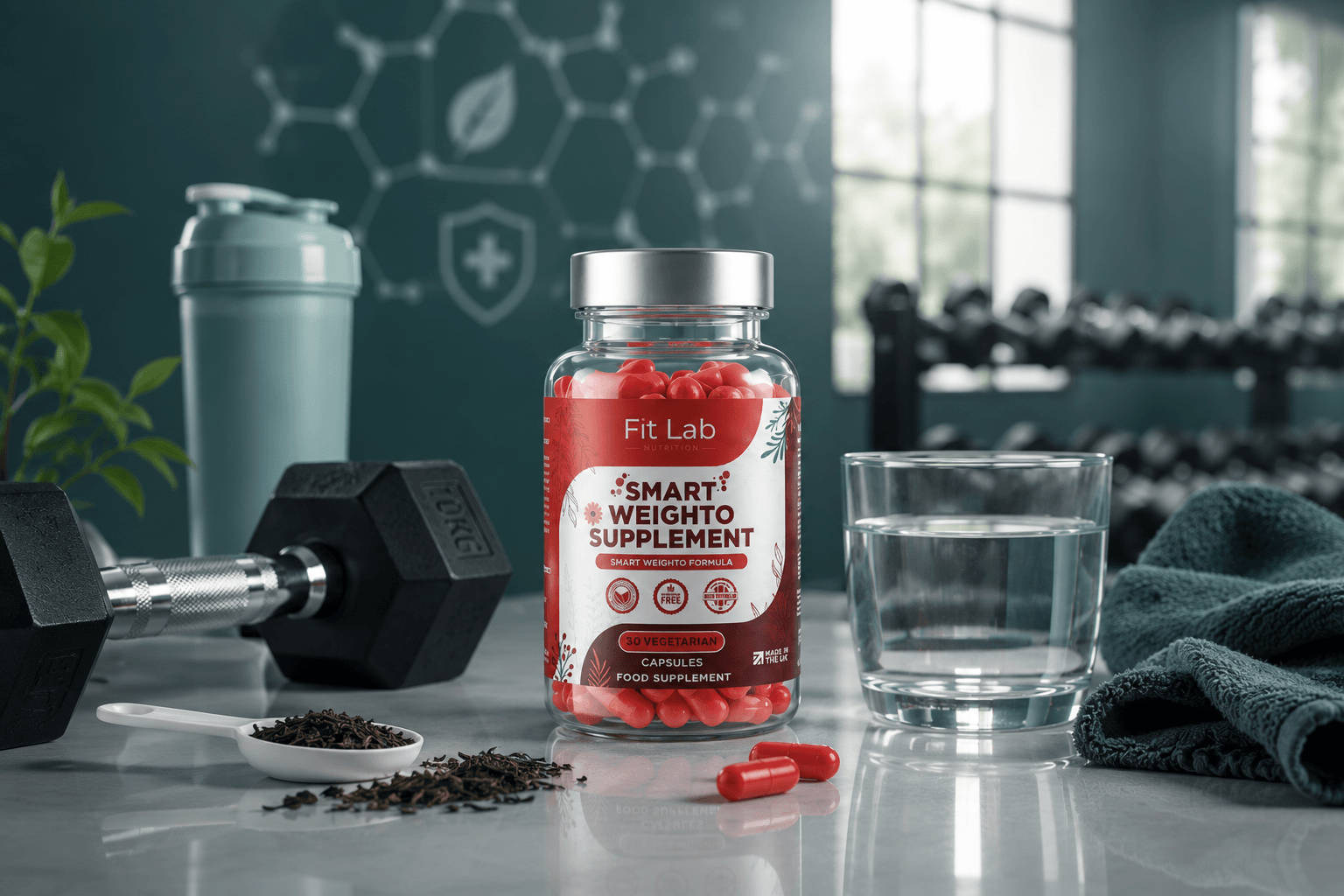
Smart Weighto is the everyday energy and gym formula. It's a caffeine-containing product, supplied in vegetarian capsules, and it's aimed at people who want a straightforward lift before training or through a demanding stretch of the working day.
Caffeine is one of the most thoroughly researched compounds in sports nutrition, which is precisely why it's here. It has a well-mapped relationship with alertness and perceived effort. What it doesn't do is create energy from nothing. Caffeine works by temporarily changing how tired you feel, and the tiredness underneath is still there afterwards. Used sensibly, that's genuinely useful. Used to paper over four hours of sleep every night, it makes things worse.
Timing matters more than most people realise. Caffeine has a half-life of roughly five to six hours in the average adult, meaning a mid-afternoon dose is still meaningfully present at bedtime. If you're taking Smart Weighto for a morning gym session, that's rarely an issue. If you're taking it at four to get through the last of the day, it may quietly cost you sleep quality and leave you needing it again tomorrow.
Some people are genuinely caffeine-sensitive, and for them this isn't the right product. If a single coffee leaves you jittery or wakeful, Smart Weighto is unlikely to suit you and there's no benefit in pushing through it. It's also not appropriate alongside other stimulant products, pre-workouts included, without paying close attention to your total daily intake from all sources.
Daily Biome
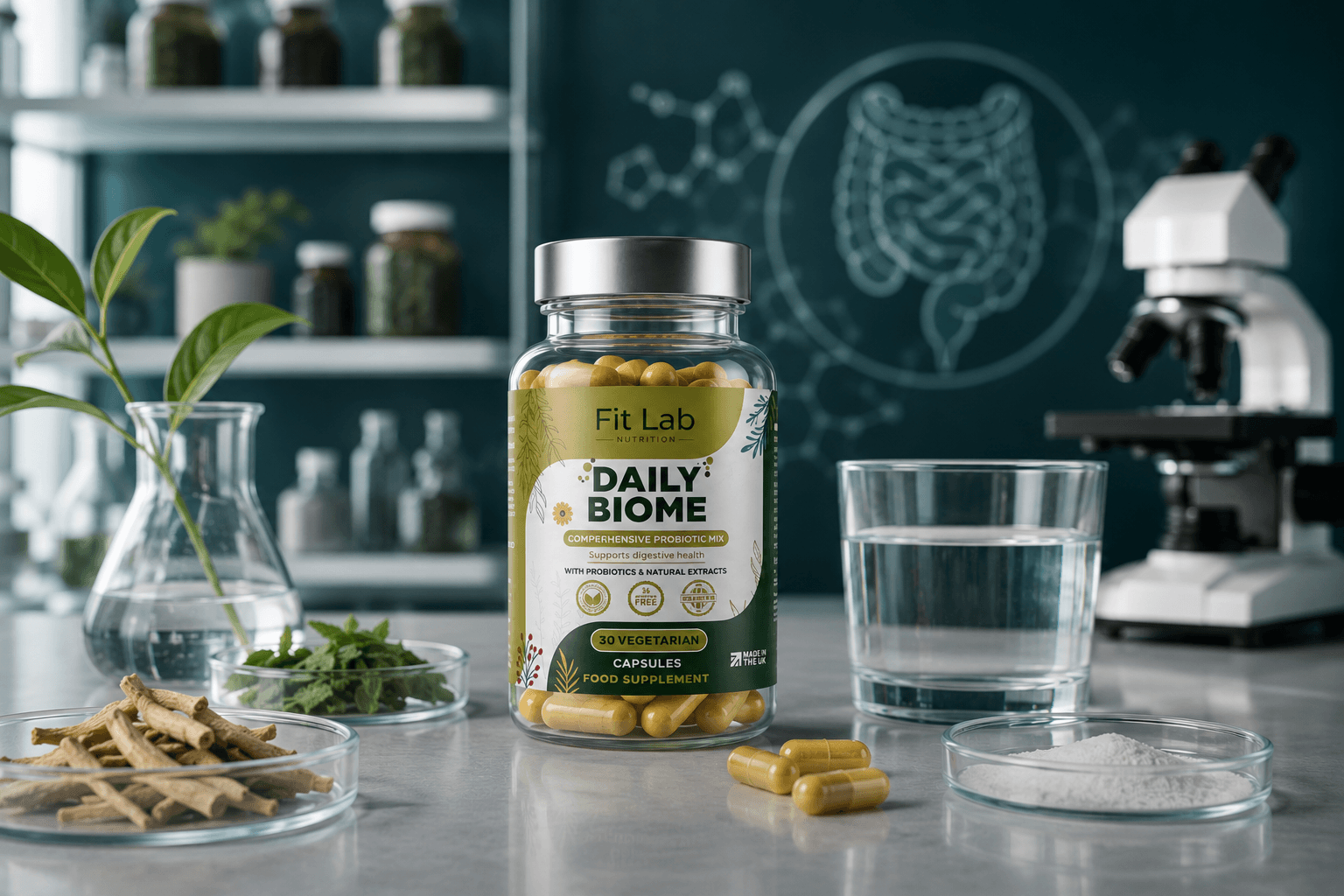
Daily Biome is the gut formula, providing live cultures in vegetarian capsules and intended to be taken every day over a sustained period.
The single most important thing to understand about live cultures is that consistency beats intensity. This is not a product where one large dose does more than a moderate dose taken regularly. The gut is a continuous system with a resident population of microbes, and influencing it is a matter of steady daily input rather than occasional intervention. Taking Daily Biome sporadically when you remember is close to not taking it at all.
Timelines are worth being realistic about. Some people notice a difference in digestive comfort within a couple of weeks. Others notice nothing for a month, and a proportion won't notice anything obvious at all, particularly if their digestion was already settled. That last group isn't necessarily wasting their time, but if you're looking for a dramatic before-and-after, live cultures rarely provide one.
A mild adjustment period in the first week or so is common and usually settles by itself. If it doesn't, or if anything feels genuinely wrong, stop and speak to a pharmacist or your GP.
Daily Biome works alongside the fibre in your diet, not instead of it. Live cultures and dietary fibre are two halves of the same picture, and if the diet is very low in plants, the supplement is doing the harder half of the job on its own.
Weight Management Support+
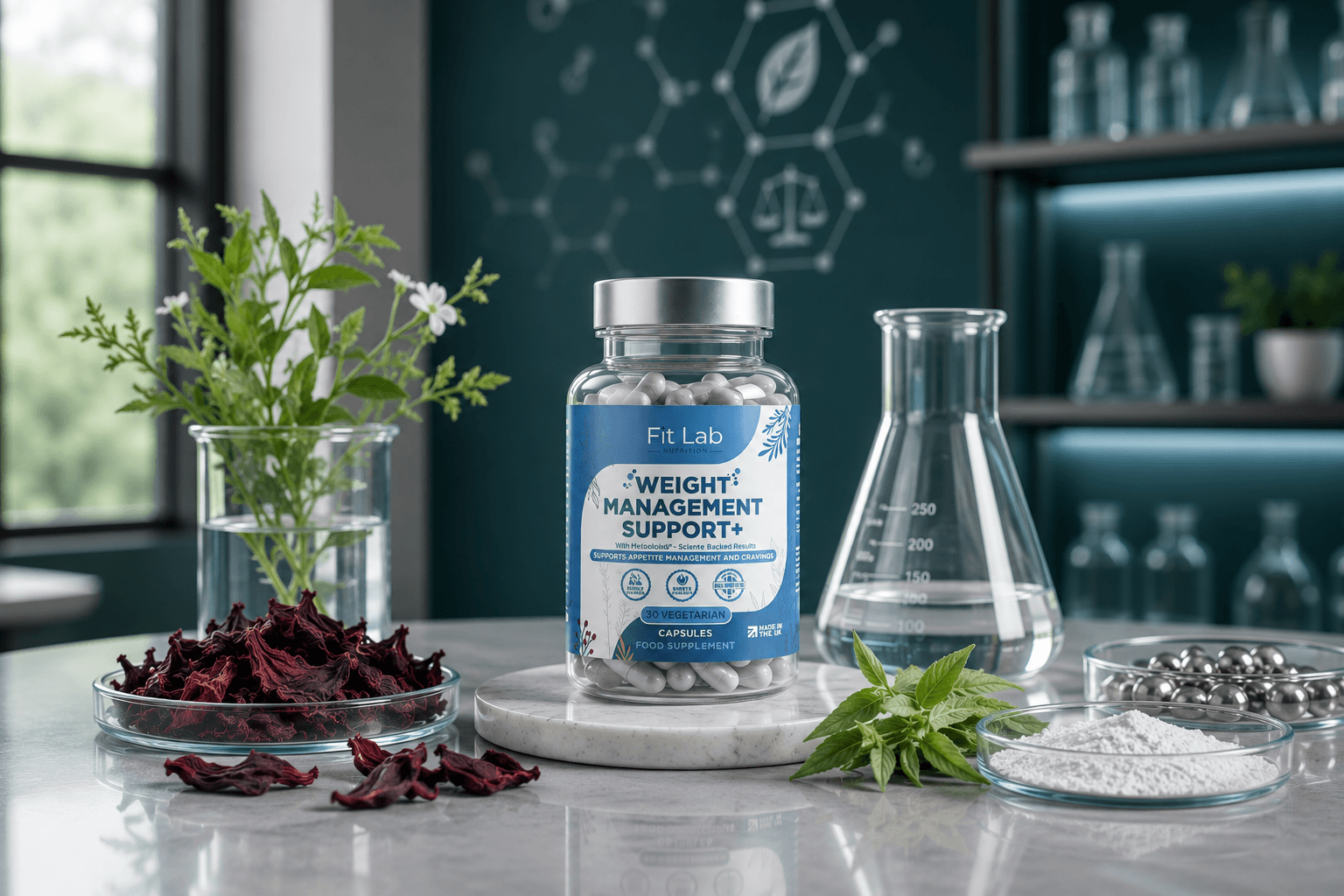
Weight Management Support+ is a botanical formulation in vegetarian capsules, intended to support appetite and cravings as part of a balanced diet and an active lifestyle.
The framing there is deliberate and it isn't legal padding. Weight management is governed by overall energy balance across weeks and months. No capsule alters that arithmetic. What a supplement of this kind may do is make the behavioural side a little more manageable, and for many people the behavioural side is where things fall apart. Not the plan itself, but the late evening when the plan stops feeling worth it.
So this is a support product in the literal sense. It sits alongside a diet you've already decided on. It doesn't substitute for one, and it won't make an unstructured approach suddenly work.
Botanicals deserve a word of their own, because "natural" gets treated as a synonym for "gentle" and it isn't. Plant extracts are pharmacologically active compounds. That's precisely why they're used, and it's also why they warrant the same care as anything else you take. Standardisation matters here more than in most categories, since the concentration of active compounds in a plant varies with growing conditions, harvest timing and extraction method. Without standardisation, two batches of the same botanical can differ substantially.
It's also not for everyone. If your relationship with food is difficult, or you have a history of disordered eating, an appetite-focused supplement is not a helpful thing to introduce, and speaking to a healthcare professional is a far better first step. That advice is here rather than buried in a footnote because it matters more than the sale does.
Finding the Right Fit
The quickest way through this is to start from the problem rather than the product.
If your issue is energy and training, Smart Weighto is the relevant one, with the caffeine caveats above taken seriously. Before you commit, though, run through the boring checks. How much are you sleeping? Are you eating enough for your training load? Are you drinking anything at all across the day? A supplement layered on top of a four-hour sleep debt is doing very little useful work.
If your issue is digestive, Daily Biome is the starting point, taken daily for at least four to six weeks before you form a view. Alongside it, look at plant variety in your diet. Range of plants matters more than quantity of any single one.
If your issue is appetite and consistency, Weight Management Support+ is designed for exactly that, provided there's already a dietary approach for it to support.
If you're not sure, that's usually a sign the answer is none of them yet, and a fortnight of sorting out sleep, water and meal structure would tell you more than any capsule.
Taking More Than One
The three products address different systems and can generally be taken together. Two things to watch.
The first is caffeine. If you're taking Smart Weighto, that's your stimulant accounted for, and it needs adding to whatever coffee, tea and energy drinks you're already having. Total daily intake is what matters, not intake from supplements alone.
The second is that starting three new things on the same day makes it impossible to attribute anything. If something helps, you won't know which. If something disagrees with you, same problem. Introduce one, give it a fortnight, then add the next.
Knowing Whether It Is Working
Most people assess a supplement badly, and it's an understandable mistake. You start something during a week that happens to be unusually busy, or unusually calm, and the supplement gets credited or blamed for the week.
The fix is to decide in advance what you're actually watching. Pick one or two things you can notice reliably. Whether the afternoon slump arrived. Whether digestion felt settled. Whether the evening was harder than usual to get through without snacking. Then check them at the fortnight mark rather than daily, because day-to-day variation is noise and you'll read patterns into it that aren't there.
Be honest about what else changed. If you began a supplement the same week you started sleeping properly and walking to work, the supplement is not the main variable, however tempting it is to conclude otherwise. That works in both directions, and it's the single most common reason people persist with things that aren't doing anything for them.
When to Speak to Someone First
Check with your GP or pharmacist before starting any supplement if you are pregnant or breastfeeding, taking prescribed medication of any kind, living with a diagnosed condition, or preparing for surgery. Under-18s should not use these products.
This isn't defensive small print. Interactions between supplements and medication are real, botanicals are pharmacologically active, and a pharmacist can answer the question in about ninety seconds.
The Science Behind Gut, Brain and Metabolic Health
Three areas that get discussed constantly online and explained properly rather rarely. What follows is a plain account of what's reasonably well established, including the parts that are still open.

The Gut Microbiome
Your digestive tract contains an enormous population of bacteria and other microorganisms, concentrated mainly in the large intestine. They aren't passengers. They ferment fibre your own enzymes can't break down, produce short-chain fatty acids that feed the cells lining your colon, contribute to the production of certain vitamins, and interact continuously with the immune tissue that surrounds the gut.
The finding that comes up repeatedly in the research is that diversity matters. A microbiome containing a wide range of species tends to be associated with better digestive and metabolic markers than one dominated by a few. The reasoning is intuitive enough. Different microbes do different jobs, and a varied population covers more ground and copes better with disruption.
What drives diversity? Diet does most of the work, and specifically plant variety. Different plants contain different fibres, and different fibres feed different microbes. This is why the advice about eating a range of plants each week has gained traction. It's a diversity strategy rather than a nutrient one.
Where honesty is required: microbiome science is young. We can observe that certain patterns correlate with health, and we're a long way from being able to tell an individual which specific species they're short of and what to do about it. Anyone offering that level of precision from a supplement is well ahead of the evidence.
The Connection Between Gut and Brain
The gut and the brain are physically and chemically connected. The vagus nerve runs between them carrying signals in both directions, and the gut produces a range of compounds that also function as neurotransmitters elsewhere in the body.
This connection is real and it explains things most people have experienced. Nerves before an interview genuinely affect your stomach. A rough digestive week genuinely affects your mood and concentration. That's the axis working as designed.
What the connection does not support is the leap made in a great deal of online content, where the gut is described as controlling mood outright and a probiotic becomes a mental health intervention. The research on live cultures and mood exists, it's interesting, and it is nowhere near strong enough to justify that claim. Serotonin produced in the gut, for example, largely stays in the gut. It doesn't cross into the brain.
How Metabolism Actually Works
Metabolism is the sum of every chemical process keeping you alive, and most of it isn't optional. Your basal metabolic rate, the energy required simply to exist, accounts for the majority of what you burn. On top of that sits the energy cost of digesting food, deliberate exercise, and everything else you do while awake.
Three misconceptions worth correcting.
"Metabolism-boosting foods" is essentially a myth. No ordinary food meaningfully raises metabolic rate. Some, notably protein, cost slightly more energy to digest, and that effect is real but small. It is not a mechanism for weight loss and no single food changes the picture.
A "slow metabolism" is rarely the explanation. Metabolic rate varies between individuals, mostly according to body size, muscle mass, age and sex, but the spread among people of similar build is narrower than most assume. The larger variable is usually daily movement outside of formal exercise, which differs enormously between people.
Meal timing is far less important than total intake. Whether you eat at eight or at ten changes very little compared with what and how much you ate across the week. Regular meals help many people manage hunger, which is a useful reason to keep them, but the timing itself isn't doing metabolic magic.
The unglamorous summary: what moves the needle is muscle mass, daily activity and total energy intake over time. Supplements sit around the edges of that, and Fitlab Nutrition would rather say so than pretend otherwise.
Quality Markers and What They Actually Mean
Certification logos are easy to print and easy to misread. Here's what each of the ones used on the range actually verifies.
Vegetarian capsules. Standard capsule shells are typically made from gelatine, an animal-derived protein. The capsules used across the Fitlab Nutrition range are plant-based instead, usually a cellulose material. This is a genuine formulation choice with a cost attached, not a labelling flourish.
Vegan suitable. A broader claim than the capsule alone. It means no animal-derived ingredient appears anywhere in the formula, including in the small processing components that are easy to overlook. Some vitamin forms are animal-derived by default and require a specific alternative to be sourced.
Gluten free. In the UK this is a regulated term with a defined threshold, not a marketing description. It requires attention to the ingredients themselves and to shared manufacturing equipment, which is why it depends on the facility as much as the recipe. Relevant to anyone with coeliac disease or genuine gluten sensitivity.
Non-GMO. Ingredients are not derived from genetically modified sources. This is a sourcing and documentation commitment maintained through the supply chain rather than something that can be tested for at the end.
Third-party testing. The most substantive of the lot, and the least visually exciting. Samples are sent to an independent laboratory with no commercial interest in the result. Testing confirms that declared actives are present at declared levels, and screens for contaminants including heavy metals and microbial content.
Why independence matters is simple. A manufacturer testing its own products is marking its own homework. An external laboratory has nothing to gain from a favourable result. Any manufacturer confident in what they're making should be willing to have that checked by someone else, and Fitlab Nutrition treats it as a baseline rather than a selling point.
Contaminant screening deserves particular attention because it addresses risks you have no way of detecting yourself. Heavy metals such as lead, cadmium and arsenic occur naturally in soil and can accumulate in plant material, which makes botanical and mineral ingredients the ones that need watching most closely. There's no taste or appearance that would warn you. The only protection is testing at the raw material stage and again on the finished batch, with defined limits that a batch either meets or doesn't. Microbial testing works on the same principle, confirming that yeast, mould and bacterial counts sit within acceptable limits before anything is released for sale.
One caution about badges generally. A logo tells you a specific thing was verified. It doesn't tell you the product is effective, well-dosed or right for you. A gluten-free, vegan, non-GMO supplement can still be a poor formulation. Certifications are a floor, not a recommendation.
What to Expect as a Customer
Ordering. Straightforward and stripped back. You'll get an order confirmation, then a dispatch notification with tracking when the parcel leaves. No account is required to buy.
Packaging. Products arrive sealed. If a seal is broken or tampered with on arrival, don't take the product, and get in touch instead. Bottles are labelled with a batch number and a best-before date, both worth keeping until you've finished the product, as they're the reference point for any query.
Delivery. Dispatch happens on working days. Orders placed at weekends or on bank holidays go out on the next working day. Estimated delivery times are shown at checkout for your address, and once a parcel is with the courier, the tracking link is the most accurate source of information.
Storage. Somewhere cool and dry, out of direct sunlight, and away from children. The bathroom cabinet is a common choice and a poor one, because of the humidity.
Questions about ingredients. These get answered properly. If you want to know the exact quantity of an active, the source of a particular ingredient, or whether something is suitable given a specific dietary requirement, ask. If the honest answer is that a product isn't suitable for you, that's the answer you'll get.
Medical questions. These have to go to a pharmacist or GP. Not evasion, just the correct route. Nobody here has your medical history, and a question about interaction with prescribed medication needs someone who does.
Reading the label. Worth doing before the first dose rather than after. The panel tells you the serving size, how many servings are in the bottle, and the quantity of each active per serving. That last figure is the one that matters and it's the one people skip. A bottle with a high capsule count isn't necessarily better value if the serving size is three capsules rather than one, and comparing two products on price alone without checking servings per bottle is how most people get this wrong.
Getting in touch. Enquiries are answered by someone who knows the products rather than routed through a script. Have your order number to hand for anything to do with a delivery, and the batch number from the bottle for anything to do with the product itself. Both make the answer faster and more specific.
Responsibility and Sourcing in Practice
Sustainability claims in this industry are frequently louder than the underlying practice. What follows is a description of the current position rather than an aspiration.
Supplier standards. Ingredient suppliers are selected on documentation as much as on price. That means certificates of analysis for every batch, clear country-of-origin information, and the ability to answer questions about handling and processing. A supplier who can't produce paperwork on request isn't a supplier worth using, regardless of what they're quoting.
Traceability. Every finished batch can be traced back through its component raw materials to their source. This exists primarily as a safety mechanism. If a concern is ever raised about a specific ingredient lot, traceability is what makes it possible to identify precisely which finished batches are affected, rather than guessing.
Packaging. Supplement packaging involves a real tension. Capsules need protection from moisture, light and oxygen to remain stable for their full shelf life, and the materials that do that job best are not always the easiest to recycle. Reducing packaging weight where it doesn't compromise stability is achievable. Claiming the problem is solved would be dishonest. Bottles are widely recyclable through kerbside collection in most UK local authorities, and cartons and inserts are recyclable card.
Ingredient origin. Some ingredients are grown or produced in a small number of regions worldwide, and no amount of preference changes that. Local sourcing isn't available for much of what goes into a supplement. What is available is knowing exactly where something came from and holding the supplier to a documented standard, which is the level of control that genuinely exists at this scale.
Where things stand. Fitlab Nutrition is a small operation, and small operations have less influence over their supply chains than large ones. Progress here is incremental. Anything described above is something already in place, and there's more to do.
Common Questions Answered
Can I Take Smart Weighto and Daily Biome Together?
Yes. They work on different systems and there's no reason to separate them. Start one first though, give it a fortnight, then add the second, so you can tell what's doing what. Keep the caffeine in Smart Weighto in mind when you total up your day.
How Long Before I Notice Anything?
It depends on the product. Smart Weighto is a caffeine-containing formula, so its effects are noticeable within the hour. Daily Biome works over a much longer timescale and needs four to six weeks of consistent use before you can judge it. Weight Management Support+ supports behaviour rather than producing a sensation, so it's assessed over weeks rather than days.
Is There Caffeine in All Three Products?
No. Only Smart Weighto contains caffeine. Daily Biome and Weight Management Support+ are caffeine-free.
Are the Capsules Suitable for Vegetarians?
Yes. All three products use plant-based vegetarian capsules rather than gelatine.
Do I Have to Take These Indefinitely?
No, and it's a fair question. Daily Biome is designed for continuous daily use, because live cultures need consistency to be worth taking, though plenty of people run it for a few months and reassess. Smart Weighto suits intermittent use, which also helps avoid building caffeine tolerance. Weight Management Support+ is best thought of as support during a specific period rather than something permanent.
What If I Miss a Day?
Nothing dramatic. Carry on as normal at the next scheduled dose and don't double up to compensate. Occasional missed days aren't a problem. A pattern of them, with Daily Biome in particular, will limit what you get from it.
Can I Take These with Prescribed Medication?
Ask your pharmacist or GP first. Supplements can interact with medicines, botanicals are pharmacologically active, and a pharmacist can check this quickly and for free.
I'm Pregnant or Breastfeeding. Are These Suitable?
Speak to your midwife or GP before taking any supplement during pregnancy or while breastfeeding. That's the appropriate answer regardless of the product.
Why Is the Range So Small?
Because most people need one or two things done properly rather than a shelf of options. A small range is easier to formulate carefully, easier to test thoroughly, and easier for a customer to navigate.
Should I Take These with Food or on an Empty Stomach?
With food suits most people and reduces the chance of any mild stomach discomfort. Consistency matters more than the specific timing, so pick a meal you actually eat every day and attach the dose to that. Anchoring a supplement to an existing habit is far more reliable than relying on memory.
Do I Need to Take a Break from Them?
Not as a general rule, though there's a sensible case for cycling Smart Weighto rather than taking it continuously, since regular caffeine use builds tolerance and the effect diminishes. Daily Biome is the opposite case and benefits from uninterrupted use. There's no need to take breaks purely because you've read somewhere that you should.
What Happens If a Product Doesn't Suit Me?
Stop taking it and get in touch. Note the batch number from the bottle before you do, as it makes the query far easier to look into.
A Considered Perspective
Supplements occupy a modest position in a much bigger picture. Sleep, food, movement and a manageable amount of stress do the heavy lifting, and nothing in a capsule substitutes for any of them.
What a well-made supplement can do is support the edges of that picture, honestly and predictably, when the basics are broadly in place. That's the whole intention behind Fitlab Nutrition. Formulate carefully, label plainly, say what's known and admit what isn't.
If the range fits what you need, it's there. If it doesn't, the information above should have made that clear, which is a useful outcome in itself.
This product is not intended to replace a varied and balanced diet or a healthy lifestyle. Do not exceed the stated dose. Not suitable for children. If you are pregnant, breastfeeding or taking any medication, consult your doctor before use. Do not use if the seal has been tampered with. Store in a cool, dry place, out of reach of children.