AC and Cooling Maintenance for Pacific Northwest Homeowners
The Pacific Northwest has a complicated relationship with air conditioning. For most of the year the equipment sits idle, which means when the first serious heat event rolls in — sometimes without much warning — it can catch homeowners flat-footed. Cottonwood fluff drifts across yards in late spring, pollen cakes onto fins, and moss takes hold in damp shaded spots where outdoor units often live. A few hours of attention in May or early June can mean the difference between reliable cooling during a heat dome and an expensive emergency call when every technician in the metro area is already booked solid.
Clearing and Cleaning the Outdoor Unit
The outdoor condenser is the part of your system most exposed to the PNW's particular debris mix. In spring, cottonwood fluff packs into the coil fins the way lint fills a dryer screen. Fir needles, maple seeds, and pollen layers compound the problem. All of that material restricts airflow and forces the system to work harder.
Start by cutting power at the disconnect box before touching anything. Clear the area around the unit of leaves, grass clippings, and overhanging vegetation — open air on all sides and above is the goal. Use a garden hose to rinse the fins from the inside out, pushing debris outward. A gentle spray is enough; high-pressure washing bends aluminum fins and creates its own airflow restriction. If fins are already bent, a fin comb from a hardware store can straighten them.
Some homeowners in wetter microclimates find algae or light moss has begun growing on or around the unit over winter. Wipe down the casing and confirm the unit is sitting level — refrigerant and oil inside the compressor rely on proper orientation to circulate correctly. Seasonal cooling upkeep is covered in the Department of Energy guide to maintaining an air conditioner.
Condensate Drain Cleaning
This step is easy to overlook and causes a disproportionate share of warm-season problems in the PNW. Air conditioners and heat pumps in cooling mode pull humidity out of the air inside your home, and that moisture drains out through the condensate line. In a damp climate, mold and algae grow readily in that drain pan and line, eventually clogging it entirely. When that happens, water backs up, the system may shut itself off on a float switch, and in the worst case you get water damage near the air handler.
Before cooling season, locate the drain pan under the indoor air handler and check for standing water or visible slime. The drain line typically exits through a wall or to a floor drain. Flushing it with diluted white vinegar a couple of times a year is a common and effective approach. If your system has a clean-out port on the line, a wet-dry vacuum on the exterior end can clear partial blockages. Repeated clogs suggest a secondary drain pan with its own float switch, or a condensate pump with an alarm, is worth adding.
Filter Changes and Airflow Checks
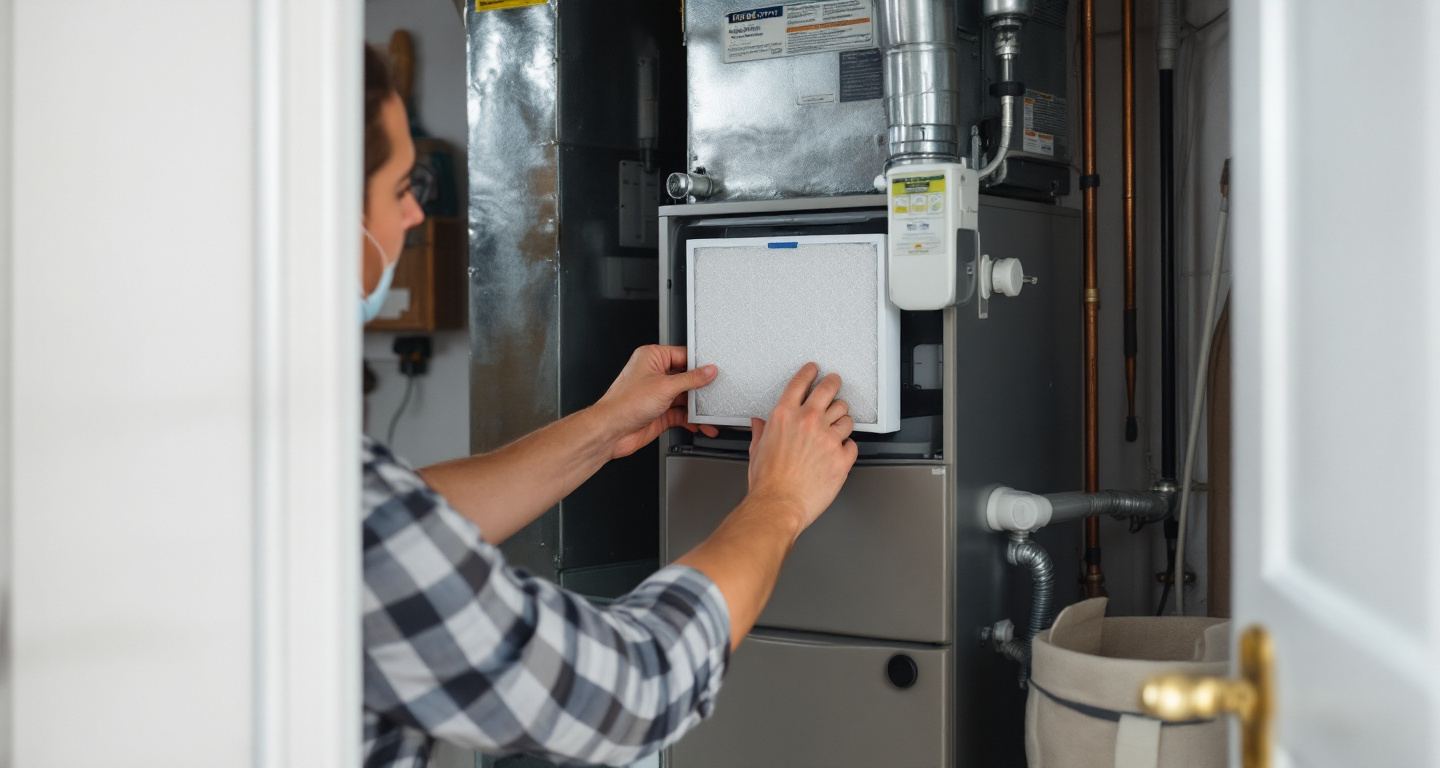
Changing or cleaning the air filter is the single most impactful thing a homeowner can do for system efficiency and longevity. In the PNW, high-pollen spring months are exactly when a filter loads up fast. A clogged filter starves the system of return air, which in cooling mode can cause the indoor coil to freeze — a frustrating problem that shuts the system down and takes hours to resolve.
Check your filter before the first cooling run of the season and plan to check it monthly during active use. Higher-efficiency filters catch more particulates but restrict airflow more, so match the filter to what the system was designed for rather than automatically reaching for the highest rating available.
While you're at it, make sure supply and return registers throughout the home are open and unobstructed. Furniture pushed against a register, a closed-off room, or a collapsed section of flex duct in the attic or crawlspace can all reduce performance noticeably.
Recognizing Refrigerant and Performance Issues — What to Watch For
A few signs suggest the system may need professional attention before it's stressed by summer heat. If the outdoor unit runs but the air coming from your vents isn't noticeably cooler than the return air temperature, that's worth investigating. Ice forming on the refrigerant lines or the indoor coil points to either a refrigerant issue or an airflow problem. Unusual sounds from the compressor — grinding, rattling, or intermittent clicking — deserve attention before hot weather arrives.
Refrigerant levels are not something homeowners can check or adjust. If you suspect a leak or undercharge, a licensed technician with the right equipment needs to diagnose it — newer refrigerant types require specific handling and certification.
A Pre-Heat-Dome Readiness Check
Recent Pacific Northwest heat events have underscored that extreme heat can arrive fast and without much lead time. Running a full system test in late spring — before you need it — gives you time to address problems without scrambling. On a mild day when outdoor temperatures are warm enough to trigger cooling, set the thermostat several degrees below current indoor temperature and let the system complete a full cycle. Listen for normal operation, confirm cool air is reaching the registers, and check that the outdoor unit starts cleanly. If something seems off, you still have time to get a technician out. Once a heat event is forecast, service call wait times across the Portland metro can stretch to several days. For heat-pump systems specifically, see https://www.energy.gov/energysaver/heat-pump-systems.