Pacific Northwest Seasonal HVAC Checklist: A Year-Round Homeowner Routine
Portland-metro homes ask a lot of their HVAC systems: reliable heat during January ice events, effective cooling when late-summer temperatures spike well beyond historical norms, and decent air quality through weeks of wildfire smoke that now arrives every summer like a fifth season. Staying on top of that takes a little effort each season, timed to what the PNW climate actually throws at you.
Spring: Cooling Readiness and the Pollen Gauntlet
Spring arrives unevenly west of the Cascades — some years the crabapples are blooming before February is out, other years a cold snap lingers into May. The goal is to complete cooling-readiness tasks before the first genuinely hot stretch, which can appear with little warning.
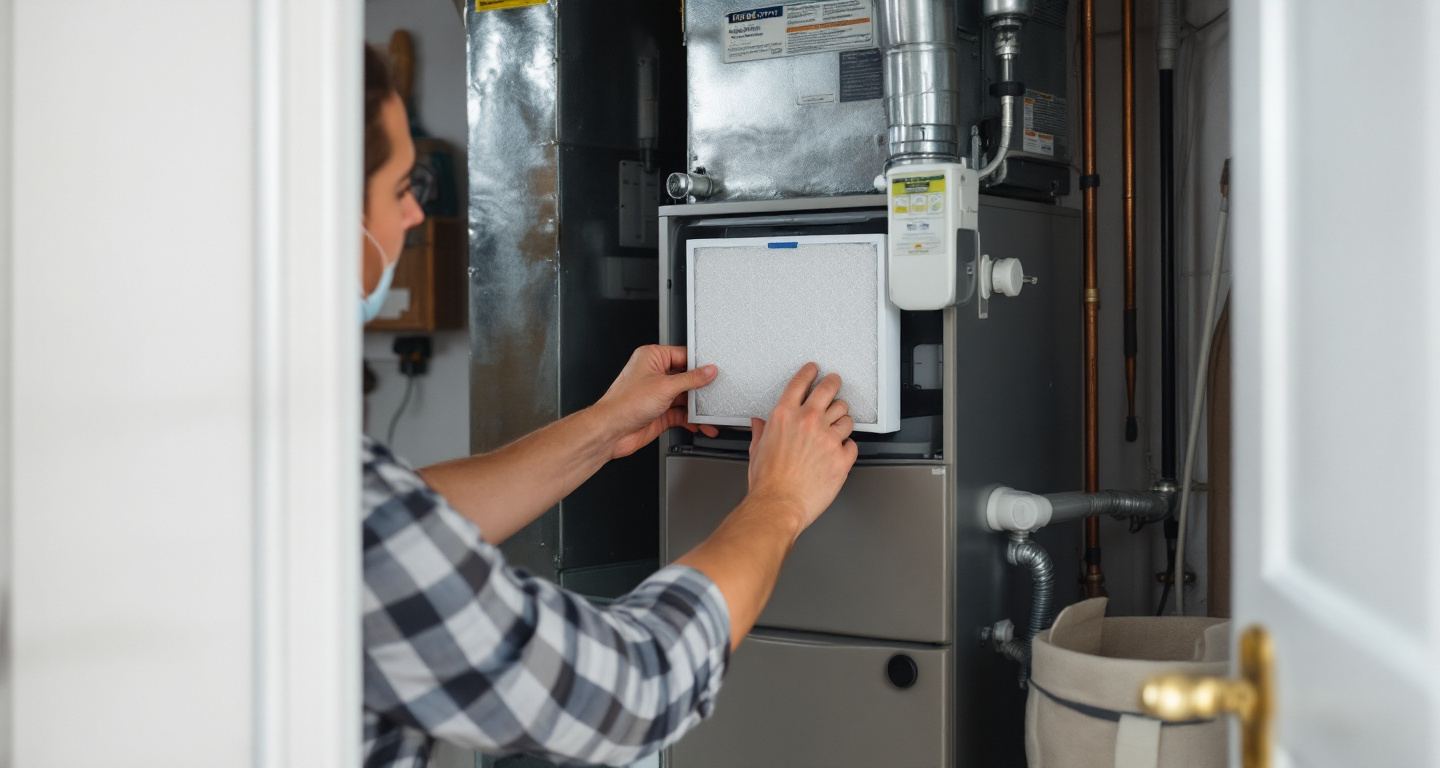
**Replace the filter.** This is the most important filter swap of the year in the Pacific Northwest. Pollen loads arrive in layered waves — trees, then grasses, then a mix that runs well into summer. A filter adequate in January will clog much faster once pollen is in the air. Swap to a new filter as pollen season begins and check it again six weeks later.
**Service the outdoor unit.** Clear debris accumulated over winter — fallen leaves mat against coil fins and restrict airflow. A light hose rinse removes cottonwood fluff before it bakes on. Trim back shrubs to maintain clearance around all sides of the unit.
**Flush the condensate drain line.** Your cooling system drains condensate through a line that can accumulate algae and mineral deposits over winter. Before the first cooling run, check that the drain pan under the air handler is clean and dry, and flush the line with a small amount of distilled white vinegar through the access port. A blocked line can back up and damage ceilings.
**Test before you need it.** Run the system for thirty minutes on a mild spring day and confirm that air from the registers is noticeably cooler than room temperature. A problem found in April is far less stressful than one discovered during the first heat event of summer. Heat-pump seasonal notes are in the Department of Energy heat pump guide.
Summer: Smoke Season and the Heat Dome Drill
Wildfire smoke is now a seasonal fact in the Pacific Northwest, and occasional multi-day heat events can push indoor temperatures to levels our building stock was not designed to handle.
**Check the filter more often during smoke events.** Fine particulate from wildfire smoke loads a filter quickly. When outdoor air quality is in the unhealthy range for multiple days, inspect the filter weekly rather than monthly. A clogged filter reduces airflow and strains the system at the moment reliable cooling matters most.
**Run continuously during heat events.** Your system recovers from a severely overheated house slowly. Pre-cool in the early morning when outdoor air is still tolerable, keep sun-facing blinds closed during the day, and let the system run rather than cycling it off and on.
**Check the condensate drain mid-season.** If the drain pan under the air handler shows persistent standing water rather than draining promptly after a cycle, the drain line needs attention before a backup damages the ceiling below.
Fall: Heating Tune-Up Before the First Cold Night
The gap between summer and the first genuine cold snap is your window to prepare the furnace or heat pump. Work done in September is work done comfortably; the same job discovered necessary on a cold October night is considerably less pleasant.
**Replace the filter again.** A clean filter entering heating season protects the heat exchanger or heat pump coil and ensures the blower is not fighting restricted airflow when it needs to run hard.
**Gas furnace: get an annual inspection.** A qualified technician should inspect the heat exchanger before the heating season begins. A cracked exchanger can allow combustion gases into living spaces with no obvious visible signs. Test carbon monoxide detectors and replace batteries at the same time.
**Clear leaves from the outdoor unit.** PNW leaf drop is heavy. Leaves mat against the outdoor unit and restrict airflow; check it every week or two during peak drop. A thick accumulation can also become a nesting site for small rodents over winter.
Winter: Ice Storms, Freeze Events, and the Long Wet Season
West-of-Cascades winters are mostly mild and wet, but the region gets ice storms that arrive fast and turn severe. Heat pump owners have specific concerns.
**Check the filter monthly.** Heating systems run more hours in winter and load filters faster. A clogged filter in January strains the blower motor and raises energy use without adding comfort.
**Manage ice on the outdoor heat pump unit.** A heat pump's built-in defrost cycle handles light frost — that is normal. Solid ice encasing the unit after freezing rain is not something the defrost cycle can manage alone. Do not chip at it. Switch to emergency heat if available and let the ice melt. Once temperatures rise after a freeze, confirm the outdoor fan spins freely before resuming normal operation.
**Plan for power outages.** Ice storms can leave homes unheated for extended periods. Know where your main water shutoff is. If you will be away during winter, keep the thermostat set to a safe minimum.
---
None of these tasks require special expertise. Taken together, they add up to a few hours per year — and they are why some systems run reliably for decades while others fail well before their time. Furnace seasonal background is at https://www.energy.gov/energysaver/furnaces-and-boilers.