Why HVAC Maintenance Matters More in the Pacific Northwest
Most homeowners understand that heating and cooling equipment needs periodic attention. But in the Pacific Northwest, the case is more concrete than the generic advice on the back of a filter box. Our climate does specific things to HVAC systems, and our mild shoulder seasons make it easy to ignore those things for months — right up until the equipment fails when you need it most.
The Lull Before the Slam
The Pacific Northwest's long, temperate springs and autumns are among its great gifts. But those gentle stretches between the heat and the cold have a way of making your HVAC system feel optional. Your furnace last ran in March. It's now October. Nothing went wrong, so why schedule a tune-up?
HVAC equipment doesn't get weaker through use — it gets weaker through neglect. Belts stiffen when they sit idle. Burners accumulate residue. Electrical contacts corrode in humid air. A system that ran fine in March may have developed problems over the summer that nobody noticed, because nobody ran it and nobody looked.
Then November arrives, temperatures drop hard, and you turn the furnace on for the first time. That's when you discover the problem — on a Friday evening, during a windstorm, when every service technician in the metro area is already booked.
The pattern repeats with cooling. Our summers are mild enough that many households go years without seriously running a heat pump or AC. Then a heat dome settles in, temperatures push into territory the region isn't built for, and homeowners flip on equipment that hasn't been serviced in years. Marginal systems fail, service companies are overwhelmed, and some people wait days for repairs in conditions that can become medically serious.
Routine maintenance breaks this cycle by catching degraded components before they face stress.
What Neglect Actually Costs You
The costs of skipped maintenance tend to stay invisible for a while, then arrive all at once.
The most gradual cost is efficiency loss. A heat pump with a coil coated in debris moves less heat per unit of electricity than a clean one. A furnace with a dirty flame sensor runs longer cycles than it should. Neither failure is dramatic — you just notice bills creeping upward until the inefficiency becomes hard to ignore.
The next cost is shortened equipment life. Running a heat pump with low refrigerant, or a furnace with a struggling inducer motor, puts stress on components that weren't designed to carry it. Equipment that should last two decades may give out in twelve years.
The third cost is the emergency repair premium. When equipment fails without warning, you pay after-hours rates and accept whatever parts are in stock. A scheduled inspection when nothing is broken is cheaper.
Finally, there are safety considerations. Gas furnaces with cracked heat exchangers can allow combustion byproducts into living spaces. Condensate drains clogged with biological growth can back up and cause water damage. A neglected system isn't just inefficient — in some failure modes it presents genuine household risks. Federal guidance on routine system upkeep is at https://www.energy.gov/energysaver/maintaining-your-air-conditioner.
Why the PNW Climate Loads the Dice
Our region has specific characteristics that accelerate maintenance needs in ways homeowners don't always account for.
The wet season runs long. Sustained humidity creates conditions where mold, mildew, and algae establish themselves in condensate pans, drain lines, and ductwork. Once established, biological growth doesn't clear when the air dries out — it waits for the next damp spell. Homeowners who move here from drier climates are often surprised by how quickly organic buildup can foul a system.
Corrosion follows moisture. Electrical contacts, coil fins, and exposed metal components that might stay pristine for years in a dry climate corrode more quickly here. A decade of skipped maintenance compounds this into a system that looks functional but operates through degraded connections and compromised components.
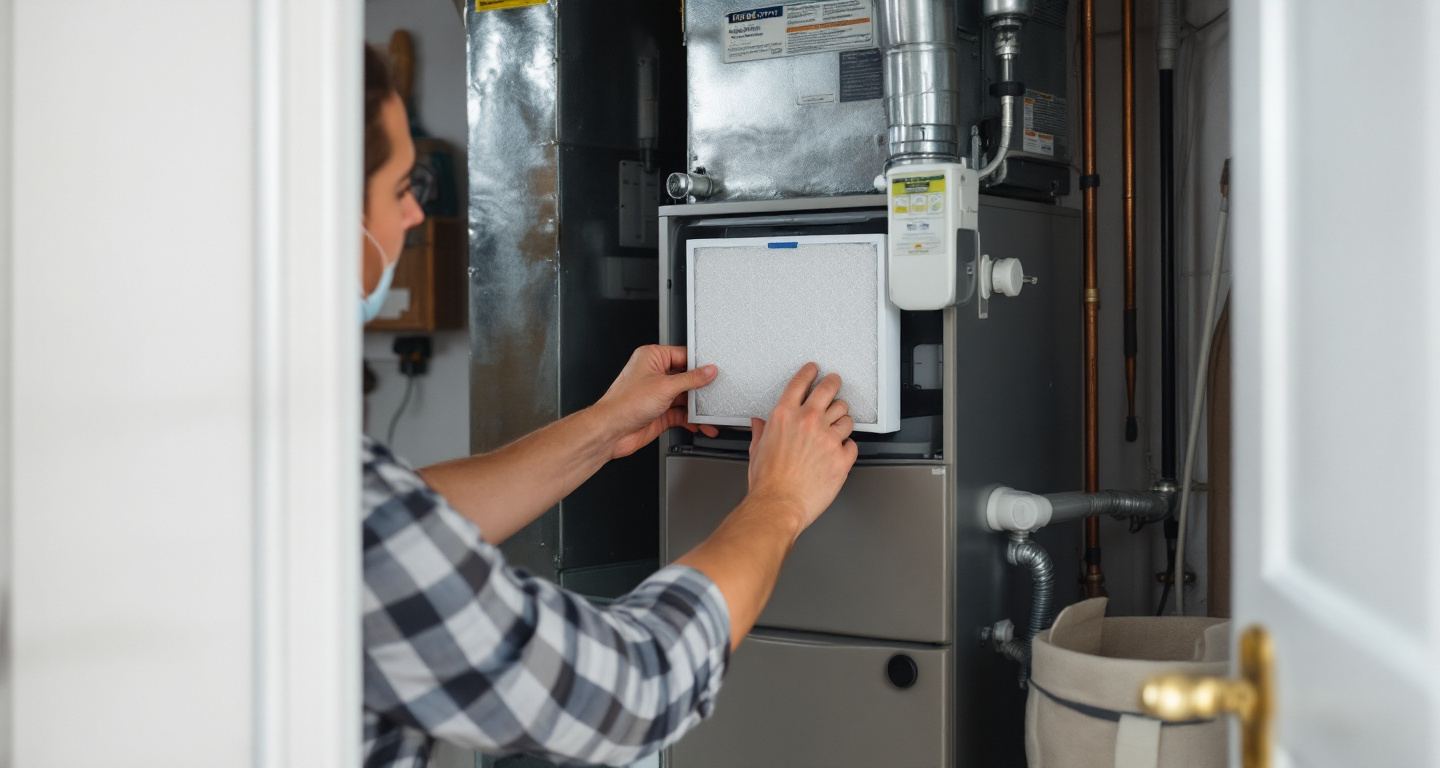
Spring and fall bring heavy pollen loads from the region's conifers, followed in recent years by wildfire ash events that can blanket the metro area within hours. Both types of debris load filters quickly and unpredictably. A filter that would last months under normal conditions may need replacement after a single smoke event. A clogged filter doesn't just reduce air quality — it restricts airflow across the heat exchanger or evaporator coil, forcing the system to work harder and run hotter, which shortens component life.
A Maintenance Calendar Built for Our Seasons
The timing of maintenance here is worth thinking through deliberately rather than following a generic national schedule.
Scheduling a heating system inspection in late summer — before the first cold snap — means work happens when technicians have availability and before anything is under load. It's the right moment to find a worn igniter or a developing crack in a heat exchanger. Having a cooling system or heat pump checked in early spring ensures it's ready before the rare but increasingly intense summer heat events.
Filter checks should be more frequent than the packaging suggests. After any wildfire smoke event, replacing the filter is worth doing regardless of when the last one went in.
None of this is complicated or expensive relative to what it prevents. It's a matter of treating HVAC maintenance as a regular household task rather than something that only happens when something breaks — which, in this climate, tends to happen at exactly the wrong time.