Heating System Maintenance in the Pacific Northwest: A Homeowner's Guide
The Pacific Northwest has a climate that keeps heating equipment honest. Portland-area winters are mild by mountain standards but relentlessly damp, and that moisture works its way into ductwork, cabinet panels, and outdoor condenser coils. Whether you heat with gas or a heat pump, the window between summer and the first cold snap is the right time to check what you have and bring in a technician before the season turns.
What a Professional Fall Tune-Up Covers
**For gas furnaces**, a proper tune-up goes well beyond swapping the filter. A technician will inspect the heat exchanger — the metal barrier that separates combustion gases from the air circulating through your home — for cracks or rust. A compromised heat exchanger is a carbon-monoxide risk, and it is the kind of failure you cannot evaluate yourself without combustion-analysis equipment. The burners get cleaned and inspected so they fire evenly; uneven ignition wastes fuel and can stress the heat exchanger over time. The technician will also check the flame sensor, igniter, and draft inducer, test the gas valve for proper operation, verify that the flue vents correctly, and confirm that combustion byproducts are actually leaving the house. The blower motor and its belts or bearings get a look as well.
**For heat pumps**, the fall service shifts focus to the refrigerant circuit and the components that make heating possible in cooling-designed equipment. The technician checks refrigerant charge — not because heat pumps leak routinely, but because a low charge significantly reduces efficiency in exactly the range of outdoor temperatures the Pacific Northwest spends most of its heating season in. Coils, both the indoor air-handler coil and the outdoor coil, get cleaned. The reversing valve — the component that switches the system between heating and cooling mode — gets checked for proper operation and for signs of it sticking or partially shifting. The defrost board and defrost cycle get tested, because a heat pump operating in PNW conditions will need to defrost the outdoor coil regularly on cold, damp mornings, and a malfunctioning defrost cycle leads to ice buildup that chokes efficiency and eventually damages the unit. Electrical connections, capacitors, and contactors all get checked while the unit is open. For a local example of heating services in the Portland area, see https://sites.google.com/view/efficiency-heating-cooling/services/heating.
Tasks Homeowners Can Handle Themselves
You do not need a technician for everything. A few straightforward habits protect your system between service visits.
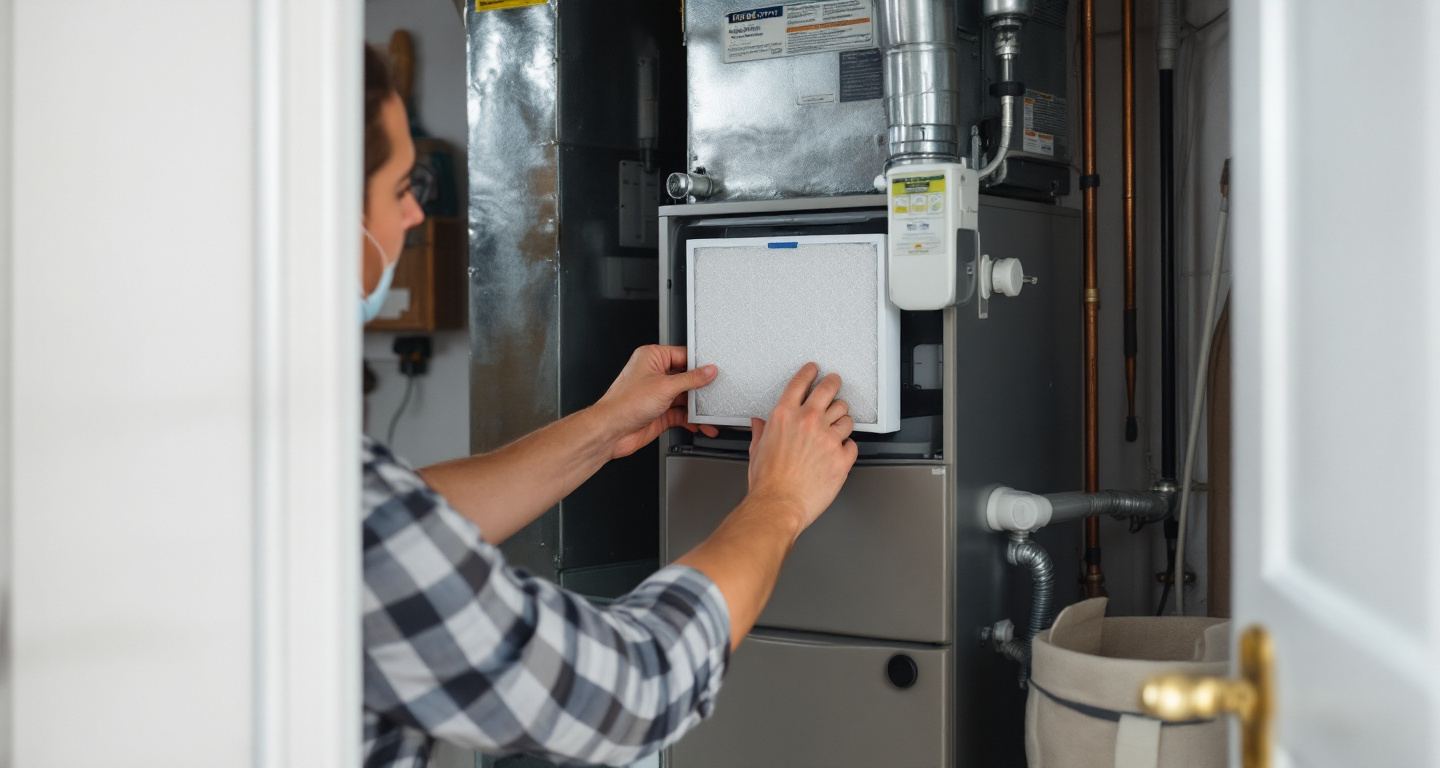
**Filters** are the most important homeowner responsibility. A clogged filter restricts airflow, which makes both furnaces and heat pumps work harder to move heat through the house. Check yours monthly during heavy-use months and replace it when it is visibly gray or restricted, regardless of what the packaging says about its rated lifespan. In a house with pets or a dusty renovation in progress, filters can clog in weeks. Keep a few spares on hand so there is no excuse to run the system dirty.
**The outdoor heat-pump unit** needs clear space around it to function. In autumn, leaves accumulate quickly in the Pacific Northwest and can pack into the fins of the outdoor coil or block airflow around the cabinet. Brush them away. Keep the area around the unit clear of overgrown shrubs. After a heavy snowfall, check that snow has not buried the unit or formed a cap over the top — heat pumps need airflow to operate, and a unit struggling to pull air through a snow bank will either underperform or trip a fault. Do not pour hot water on ice buildup or pry ice off fins; let the defrost cycle handle it, or turn the system off and let ambient air do the work. A gentle rinse with a garden hose when the weather is above freezing is fine for clearing debris from the coil fins.
**Supply and return vents** inside the house should stay unobstructed. Furniture pushed against a return grille, or rugs rolled over floor registers, reduces airflow in ways that affect the whole system. Make a habit of checking registers when you rearrange a room.
Combustion Safety for Gas Furnaces
Gas equipment carries risks that electric heat pumps do not, and the Pacific Northwest's wet fall weather heightens a few of them. Flue pipes and exhaust vents that run through unconditioned spaces — attics, garages, crawlspaces — can develop condensation issues or rust at joints as temperatures swing. Before heating season, visually inspect the flue pipe sections you can see for rust, separation at joints, or signs of blockage. Nesting animals — birds and rodents are common around Portland — sometimes use furnace flue terminals as shelter during warm months. A technician will check this, but if yours is accessible you can look yourself.
A functioning carbon-monoxide detector on every level of your home, and especially near sleeping areas, is not optional with gas equipment. CO alarms have finite lifespans, so confirm yours is still within its service life, not just that it beeps when you test the button. A local example of seasonal furnace maintenance is outlined at https://sites.google.com/view/efficiency-heating-cooling/services/furnace/furnace-maintenance.
Timing: Get Ahead of the Season
The ideal time to schedule a tune-up is late summer or early fall, before the first cold nights push demand. Technicians are easier to reach, parts are in stock, and you have time to address anything that needs repair before you actually need the heat. Waiting until the weather turns often means a longer wait. If your equipment is more than a decade old, factor in extra lead time — older units sometimes reveal deferred problems during inspection that require ordering parts. A little attention in September pays dividends through March. Federal background on furnaces and boilers is in the Department of Energy furnace guide.