HVAC Maintenance in the Pacific Northwest: What You Can Do Yourself and When to Call a Pro
The Pacific Northwest puts HVAC systems through a particular kind of workout. Months of damp, cool air give way to stretches of genuine heat — and Portland-area homes that never needed air conditioning a generation ago now depend on heat pumps to get through summer. Knowing what you can safely handle yourself and what requires a licensed technician makes your system more reliable, extends its life, and keeps you from turning a minor issue into a costly one.
What Homeowners Can Safely Handle
Most DIY HVAC maintenance is really just housekeeping — straightforward tasks that require no special tools and carry little risk when done correctly.
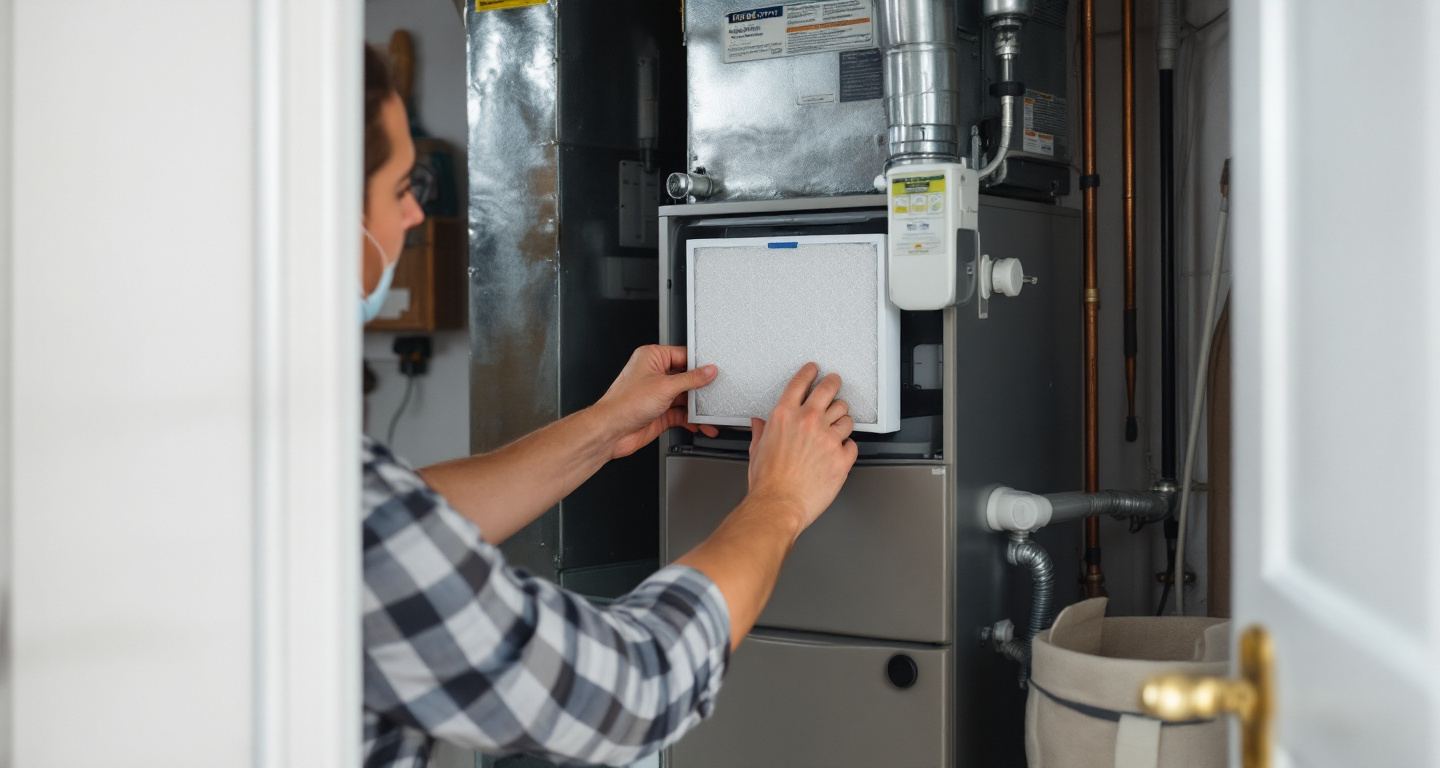
**Filters** are the most important routine task and the most neglected. A clogged filter forces the blower to work harder, reduces airflow, and can cause heat exchangers and evaporator coils to overheat or freeze. Check yours monthly during heavy-use seasons. How often you replace it depends on filter type, pets, and how dusty or pollen-heavy your home runs — quarterly is a reasonable floor for most households. When a filter looks gray and caked, replace it; don't vacuum and reinstall it.
**Outdoor unit clearance** matters more in the PNW than in drier climates because our landscape grows fast. Shrubs, ornamental grasses, and ivy can close in around a heat pump or condenser within a single growing season. Keep vegetation trimmed back a couple of feet on all sides. After windstorms, check for leaves and debris collected against the cabinet. A garden hose rinsed gently from the inside out — unit off — can clear surface grime from the fins, but avoid pressure washers, which bend the aluminum fins and restrict airflow.
**Vents and registers** deserve a periodic walk-through. Make sure return air grilles aren't blocked by furniture or rugs. Closing supply registers in unused rooms seems like a savings but raises system pressure and causes uneven wear — leave most of them open.
**Thermostat batteries** are easy to forget until the system stops responding on the first cold morning of fall. Swap them annually, and while you're at it, confirm the thermostat is cycling the system correctly.
**Condensate drain lines** collect moisture pulled from indoor air during cooling mode. In humid PNW summers, algae and mold can slowly clog the drain, causing water to back up near the air handler. Locate the access port and pour a cup of diluted white vinegar down it a few times a year. If you see standing water around the air handler, the drain line is the first thing to check.
**Visual checks** cost nothing. Walk the system seasonally — look for rust, water stains around the air handler, frost on refrigerant lines, or anything out of place. Catching a slow drip or damaged insulation wrap early prevents bigger problems. General background on home air quality is at https://www.epa.gov/indoor-air-quality-iaq/introduction-indoor-air-quality.
What Requires a Licensed Pro
Some tasks look like DIY from the outside but carry real risk or require equipment and certification homeowners simply don't have.
**Refrigerant** is the clearest line. Handling it requires EPA certification, specialized gauges, and recovery equipment. Adding refrigerant to a system that's running low without finding and fixing the underlying leak just postpones the failure. If your heat pump is losing cooling capacity, ice is forming on the indoor coil in summer, or refrigerant lines are frosting over, that's a service call — not a YouTube fix.
**Gas and combustion work** on furnaces must be handled by a licensed technician. Heat exchanger cracks, improper burner adjustment, and venting problems can produce carbon monoxide. A cracked heat exchanger isn't visible from the outside and requires proper inspection. This is not a task to approximate.
**Electrical components** — capacitors, contactors, control boards — carry real shock hazard and can fail in ways that damage the compressor or other expensive components if mishandled. Even with the power off, capacitors store charge. Leave electrical diagnosis and replacement to someone trained for it.
**Sealed components** like the compressor are best evaluated and replaced by a pro. Mishandling them can introduce contamination that shortens the life of the whole system.
**Anything under warranty** deserves a careful read before you start. Many equipment warranties require maintenance and repairs to be performed by a licensed contractor. A filter swap won't void anything, but DIY work on refrigerant, electrical, or mechanical components often will — even if the work itself was done correctly.
Why the Two Approaches Work Together
An annual service visit from a licensed technician covers what homeowners can't see or access: refrigerant pressure checks, electrical connection inspection, coil cleaning, combustion analysis on gas equipment, and a performance check that catches efficiency losses before they become breakdowns.
That visit goes better when the homeowner has kept up with filters and clearance all year. A clean system is faster to service and shows problems more clearly. Homeowners who do seasonal walkthroughs also tend to notice details — a new sound, a stain that wasn't there, a shift in how the system behaves — that help a technician find the real issue faster.
In the PNW, scheduling that annual visit before heating season beats waiting for the first cold front. Demand for service spikes in October, and a system coasting on a marginal component tends to fail on the first genuinely cold night — exactly when the next appointment is two weeks out. A broader Portland-metro home-comfort overview is at https://sites.google.com/view/efficiency-heating-cooling.